Old Version
International

Entering a New Phase?

Retaliating against Washington’s new sanctions with tightened rare earth controls, China is adopting a more assertive approach toward US pressures, shifting from mitigating damage to seeking reciprocity on equal-footing

By Yu Xiaodong Updated Dec.1

Since the US launched its trade war against China in 2018 under US President Donald Trump’s first term, the world’s two largest economies have endured years of friction in various fields. Under the Biden administration, bilateral relations further drifted apart as Washington stepped up its containment policies and escalated technological bans under the so-called “small yard, high fence” policy.  

For much of the past eight years, China’s response to what it described as US “bullying” was largely defensive, focusing on preventing fallout and minimizing damage rather than matching Washington’s pressure with countering retaliation.  

However, after Trump assumed the US presidency for the second time and launched a new tariff war against China and much of the rest of the world, the picture has shifted as China opted for a much tougher stance than before.  

Instead of seeking negotiations to reach compromises like most other countries have done, China matched Trump’s every tariff threat, which went as high as 245 percent, with reciprocal counter-measures.  

In September, the two countries engaged in several high-level diplomatic interactions, including phone calls between the Chinese and US defense and foreign ministers, and trade negotiations held in Madrid, Spain.  

On September 18, Chinese President Xi Jinping held a video conversation with Trump, the third time this year. Both leaders described the conversation as “constructive.” Subsequently, Trump said he would meet with Xi in South Korea in November during the APEC Economic Leaders’ Meeting, and that the two leaders agreed to visit each other’s countries. China has not confirmed whether Xi would attend the APEC meeting or accept the mutual visits. 

While none of these talks resulted in any major deals, the positive tone from the leaders of both countries and the prospect of a face-to-face meeting between Xi and Trump led many analysts to believe the world’s two largest economies had reached a tactical detente that would help stabilize bilateral relations. Nevertheless, as containing China’s rise continues to be among the top priorities of both the Trump administration and the US Congress, the fragile truce has already proved to be short-lived.

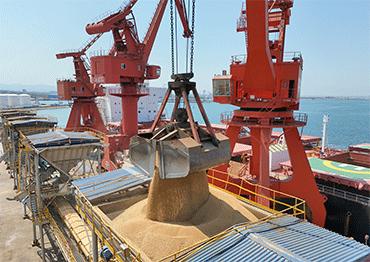
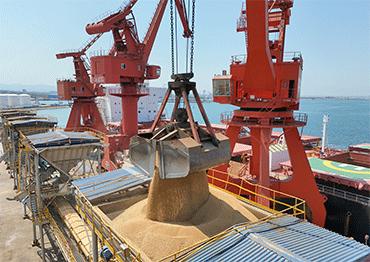
Imported Brazilian soybeans are unloaded from a ship, Yantai Port, Shandong Province, June 17, 2025 (Photo by VCG)

Swift Escalation 
Only a few days after the Xi-Trump call, Washington launched new restrictive measures targeting Chinese interests.  

On September 25, Trump announced new tariffs on goods including trucks, pharmaceutical products, kitchen cabinets and upholstered furniture, many of which are imports from China.  

On September 29, the US Commerce Department released an interim final rule, which vastly expands export controls on non-US entities owned 50 percent or more, directly or indirectly, by any of the roughly 3,000 already blacklisted Chinese companies. The new rule is expected to add a few thousand more Chinese companies to the blacklist. 

On October 7, a bipartisan committee of the US Congress released a report on the development of China’s semiconductor industry, calling for broader bans on chip-making equipment sales to China. In the meantime, the US Trade Representative’s decision to impose port service fees on ships owned, operated and built by Chinese companies took effect on October 14.  

On October 9, China fought back, as China’s Ministry of Commerce (MOFCOM) issued multiple notices, tightening export controls on rare earth materials, related equipment and technologies,and permanent magnets.  

China had already tightened export controls on rare earth materials in April as part of the response to Trump’s “reciprocal” tariffs. The new rule expands the list of controlled elements to include holmium, erbium, thulium, europium and ytterbium, covering all heavy rare earth elements. It also places new controls on specific materials, magnets and technologies containing these elements. 

MOFCOM has made clear that any requests to use rare earths for military purposes will be automatically rejected and that exports of rare earth materials used in highly advanced technologies, including sub-14-nanometer semiconductors, next-generation memory chips, semiconductor manufacturing or testing equipment, will be subject to case-by-case review by Chinese authorities.  

China also for the first time applied the so-called foreign direct product rule (FDPR), a mechanism the US introduced to restrict semiconductor exports to China from non-US companies if these products incorporate US technology, software or equipment. MOFCOM’s rule states that any rare earth products manufactured abroad using Chinese technology or containing over 0.1 percent of China-produced minerals will be subject to approval by Chinese authorities. 

China also mirrored the US’s decision to impose port fees on China-linked vessels. In a separate notice announced the same day, MOFCOM imposed port service fees for US-linked vessels, including those owned or operated by US entities or individuals, those with 25 percent or more US ownership or control, those flying the US flag and those built in the US. 

Moreover, China added 14 foreign companies, most of which are based in the US, to its “unreliable entity list,” which bans them from carrying out commercial operations in China, including any export and import activities. 

The following day, on October 10, China announced it was opening an anti-trust investigation into US semiconductor firm Qualcomm for its alleged failure to declare details of its acquisition of Israeli chip designer firm Autotalks to Chinese authorities. 

In response, Trump said in a Truth Social post on October 10 that he would impose a 100 percent tariff on China, effective November, “or sooner, depending on any further actions or changes taken by China.” Despite the new threat, China remains defiant. 

Regarding Trump’s new tariff threats, a Q&A statement MOFCOM released on October 12 stated that “resorting to threats of high tariffs is not the right way to engage with China.” 

Emphasizing that China’s moves are defensive actions against the US’s new restrictive measures, the statement warned that “if the US persists in acting unilaterally, China will resolutely take corresponding measures to safeguard its legitimate rights and interests.” 

“Our position on a tariff war remains consistent – we do not want one, but we are not afraid of one,” MOFCOM said.

Workers mine rare earth minerals, Yunnan Province, March 18, 2008 (Photo by VCG)

Changing Strategy 
For many observers, China’s new moves mark a watershed shift in its strategy in handling its disputes with the US, which now emphasizes reciprocity and parity. 

“China’s latest countermeasures reflect a new framework that is strictly reciprocal in its strategy – whatever move the US makes, China will respond in kind and with equivalent strength,” said Shen Yi, a professor of international politics at Shanghai-based Fudan University, in his regular podcast for guancha.cn on October 11. 

“When the US restricts exports of advanced chips, China restricts critical minerals. When Washington expands sanctions through its entity list, China responds with its own unreliable entity list, Shen said. “Through the interaction, a dual game structure has emerged – rare earths versus high-end semiconductors.” 

Shen stressed that China’s moves reflect a growing confidence in dealing with the US from a position of strength. “Instead of merely taking symbolic actions, China is now pursuing countermeasures that are effective and grounded in its own strengths,” he said. “The use of this kind of precise, asymmetric deterrence is likely to become the new normal in China-US relations.” 

The principle of mutuality and reciprocity has been a constant theme of Chinese diplomacy since Trump took office early this year. In March, Lin Jian, a spokesperson for China’s Foreign Ministry, made clear that Beijing would not back down if the Trump administration sought to reignite a trade war. 

“Intimidation does not scare us. Bullying does not work on us. Pressuring, coercion or threats are not the right way of dealing with China. Anyone using maximum pressure on China is picking the wrong guy and miscalculating,” Lin said, “If war is what the US wants, be it a tariff war, a trade war or any other type of war, we’re ready to fight till the end.” 

It is the same sentiment underlying the recent MOFCOM statement. Behind the rhetoric, China’s message is clear: It will engage the US from a position of strength, not weakness. 

China’s growing confidence stems from a consolidated position in the global supply chain, despite the headwinds. According to data released by China’s General Administration of Customs, total goods trade in the first nine months of the year increased by 4 percent, with exports surging by 7.1 percent and imports dropping slightly by 0.4 percent. 

In September, China’s exports in dollar terms increased by 8.3 percent, much higher than market expectations. While China’s exports to the US have been steadily declining, with a 27 percent year-on-year drop in September, the gap has been filled by alternative markets. Exports to the European Union, ASEAN countries and African countries surged by 14, 15.6, and 56.4 percent respectively. 

With the US market now accounting for less than 10 percent of China’s exports, the impact of Trump’s threat to impose higher tariffs on Chinese goods is far less serious than it was eight years ago. Meanwhile, despite technology bans imposed by the US, China’s high-tech sector has experienced rapid growth. In the first three quarters of the year, high-tech exports increased by 11.9 percent year-on-year, with the export of industrial robots jumping by 54.9 percent.

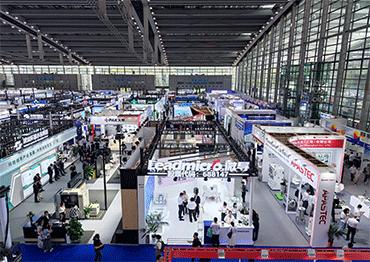
The second WESEMiBAY Semiconductor Ecosystem Expo 2025 kicks off in Shenzhen, Guangdong Province, October 15, 2025 (Photo by VCG)

‘Fighting While Talking’ 
Despite China’s increased assertiveness, its overall strategy remains defensive. In its statement, MOFCOM emphasized that China is open for negotiations. Calling for the US to continue to adhere to “the important consensuses of the phone calls between the two heads of state” and continue to use the China-US economic and trade consultation mechanism, it urged the US to “promptly correct its wrong address” and “address respective concerns and properly manage differences through dialogues and on the basis of mutual respect and equal-footed consultation.” 

In his September call with Trump, Xi reiterated that China seeks to make joint efforts with the US to achieve “mutual respect, peaceful coexistence and win-win cooperation.” The fact that China’s new rare earths export control mechanism will become effective only on December 1 leaves ample room for further negotiations. 

After threatening to cancel his expected meeting with Xi and increase tariffs on China by 100 percent, which sent the US stock market into a slump, Trump softened his tone on China. In a Truth Social post on October 12, Trump said the US would like to “help China, not hurt it.” “Don’t worry about China, it will be all fine!” he added, without elaborating. 

It remains unclear whether or when the two leaders will have a face-to-face meeting, but most analysts believe that bilateral relations will not completely disintegrate. 

In a commentary published on domestic media outlet guancha.cn on October 11, Jin Canrong, a professor of international politics from the Renmin University of China, said Beijing’s countermeasures against the US are expected to stay within defined limits. 

“The future of China-US relations will be characterized by ‘fighting while talking,’” Jin said. “The US often employs a ‘carrot and stick’ approach in the game of major power competition, and China is now prepared to play by the same rules,” he added. 

“China has long sought to maintain stability and continuity of its policy toward the US,” Liu Qing, professor and vice president of the China Institute of International Studies, told NewsChina. Liu emphasized that by learning from history and adapting to the future needs of global development, it is imperative that China and the US are partners, not rivals. 

“Mutual respect and equal consultation are key principles refined through bilateral economic and trade talks, and they should remain essential for cooperation across all areas between the two countries,” Liu added.

Print