Old Version
Cover Story

Biotech Bottleneck

After a decade of heavy investment, China’s domestically developed novel drugs have finally reached the market. Yet for the country’s biotech sector to remain profitable and sustain innovation, experts are prescribing systemic reforms in healthcare

By Huo Siyi , Niu He Updated Dec.1

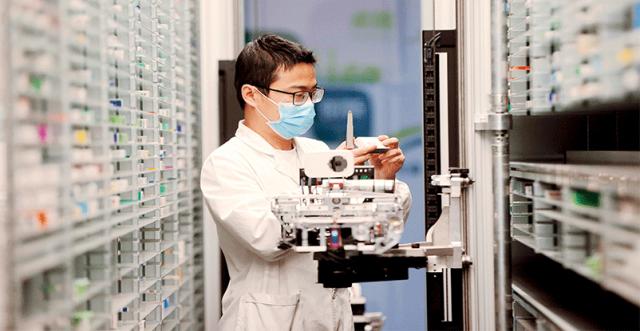
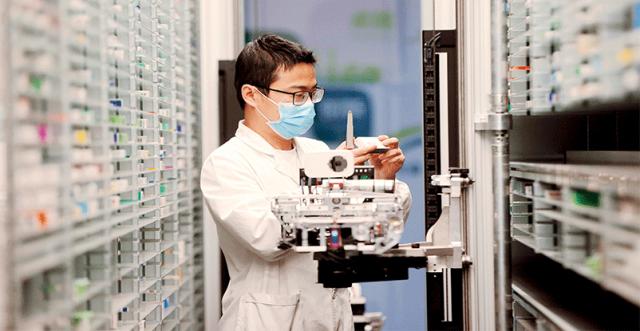
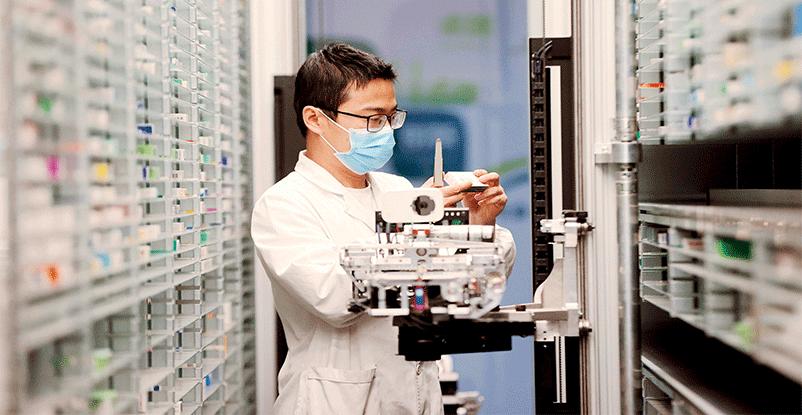
A pharmacist checks medicines in a smart pharmacy, Third People’s Hospital, Deqing County, Huzhou, Zhejiang Province, April 2, 2023 (Photo by Xinhua)

China announced on July 1 the creation of a specialized reimbursement catalogue for domestically developed novel drugs that had previously been too expensive to be covered by the country’s basic medical insurance system.  

Soon after, the first nationally unified Clearing and Settlement Center for both basic and commercial medical insurance began trial operations in several of Beijing’s top hospitals, including Peking Union Medical College Hospital.  

Similar trials have been underway in cities and provinces such as Shanghai, Shandong and Guangdong over the past two years. The new system allows patients to claim reimbursements from both basic and commercial medical insurance simultaneously, eliminating the need to submit multiple hospital bills to insurers days after receiving basic insurance payouts. The reform makes costly indigenous novel drugs more affordable and accessible.  

China has introduced a series of policies to encourage innovation in drug development since January, sparking renewed market confidence in the biopharmaceutical sector. Among 39 listed innovative drug producers that released semiannual reports by August, 27 reported net profit growth, according to financial data platform Wind.  

By September 30, the Hang Seng SCHK Innovative Drug Select Index,which tracks 37 major pharmaceutical companies listed in Hong Kong with the top 10 from the Chinese mainland, had risen by 108 percent year-to-date.  

China’s biopharmaceutical boom did not happen overnight. It took nearly a decade, roughly the full cycle of a novel drug’s journey from laboratory to production, for the industry to mature. From 2015 to 2024, a combination of policy support, capital investment and talent development drove the rise of the country’s innovative drug ecosystem.  

However, industry insiders caution that high production costs and an inappropriate pricing system continue to hinder profitability and investor confidence, both of which are crucial for sustaining future innovation in China’s domestic biotech sector. 

Injection of Growth 
Systemic reforms, global integration and improved financing have been key to China’s biotech transformation.  

On July 22, 2015, authorities issued a notice urging 1,622 drug registration applicants to recheck and correct their clinical data to ensure accuracy and completeness. Companies that refused to amend falsified or incomplete data faced penalties.  

The clampdown on clinical data fraud marked the beginning of a decade-long reform of China’s healthcare and pharmaceutical systems, aimed at building a quality-driven, innovation-oriented biotech industry.  

On August 9, 2015, the State Council released a circular on reforming the review and approval system for drugs and medical devices. The document redefined “innovative drugs” as those novel not only in China but globally, encouraging innovation over repetitive production of low-quality generics.  

In subsequent years, a series of policies accelerated the evaluation and approval of new drugs both domestic and foreign, particularly those with significant clinical potential. 
 
“That year [2015] witnessed a massive influx of capital and the return of overseas-trained scientists who launched startups focused on innovative drugs,” said Wang Li, CEO of a biotech firm in China, in a June interview with the 21st Century Business Herald. 
 
Two years later, China’s Food and Drug Administration (now the National Medical Products Administration, or NMPA) joined the International Council for Harmonization of Technical Requirements for Pharmaceuticals for Human Use (ICH), a global nonprofit established in 1990 to standardize the scientific and technical aspects of drug registration. Membership in the ICH is widely regarded as essential for ensuring efficient, high-quality drug approval processes.  

“This is no less significant than China’s accession to the World Trade Organization (WTO),” said Wang Shuguang, a partner at Shenzhen-based medical investor GTJA Investment Group, in an interview with The Paper in 2017. “It paved the way for the internationalization of China’s biotechnological industry in the long run.”  

Financing also became easier. On April 30, 2018, the Hong Kong Stock Exchange amended its Main Board Listing Rules to allow certain biotech firms to go public that had yet to turn a profit but possessed strong innovation potential. On June 13, 2019, the STAR Market, a board focused on high-tech stocks, launched on the Shanghai Stock Exchange. Within its first year, more than 20 biotech companies, including Bloomage Biotech, Haohai Biological Technology and Micro-Tech Endoscopy, were listed, according to a July report by China’s Tianfeng Securities.  

Citing Wind data, the report noted that the total R&D spending by Chinese biotech companies listed in either the Chinese mainland or Hong Kong increased more than sixfold between 2016 and 2024, from 19.2 billion yuan (US$2.7b) to 119 billion yuan (US$16.7b).  

Another key factor has been China’s so-called “engineer dividend.” According to a June report by GF Securities, PhD graduates in medical sciences accounted for 18 percent of all PhDs in China in 2022, up from 11 percent in 2009.  

By 2024, China had surpassed the US to become the world’s largest producer of indigenous innovative drugs, totaling 3,575 items entering Phase I clinical trials since 2015, according to a 10-year review jointly released on March 18 this year by the Research Institute of Drug Regulatory Sciences at Tsinghua University in Beijing and life sciences data company PharmCube.  

Patent activity in pharmaceuticals and medical technology has surged by 379 percent since 2014, according to the Global Life Sciences Atlas, published in May by US-based investment and real estate services firm CBRE.  

In 2023 alone, China published 222,964 life science papers, achieving a compound annual growth rate of 11.38 percent over 10 years, according to a 2024 report by the China National Center for Biotechnology Development.

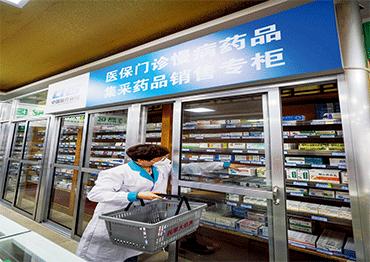
A pharmacy clerk collects drugs covered by China’s basic medical insurance system, Zouping, Shandong Province, February 12, 2023 (Photo by CNS)

Hard to Prescribe 
From mid-2021 to 2024, as huge investments and efforts finally began to bear fruit, China’s innovative drug sector saw share prices continue to fall as investors doubted their chances of realizing returns.  

According to Wang Liming, a partner at Co-win Ventures, an investment group active in healthcare sectors across China, North America and Europe, the early boom in innovative drugs investment was driven by assumptions that their high prices and profit margins would be covered by China’s basic medical insurance system or other third-party payment institutions, and that profits would be guaranteed in both domestic and overseas markets.  

“Obviously, several years later, the two assumed conditions proved unconvincing,” Wang said at a symposium in 2024. 
 
Pharmaceutical companies had hoped their innovative drugs could enter public hospitals covered by national basic medical insurance to secure a steady cash flow. However, prices offered under the two existing insurance catalogues remain too low to make that possible.  

In response to widespread complaints about expensive medical products, the two catalogues, one for full coverage and the other covering 70 to 90 percent of personal costs, were designed to ensure that basic medical services remain affordable for most citizens. As a result, most drugs listed are inexpensive generics.  

To further reduce personal medical spending and improve oversight of the basic medical insurance system, the National Healthcare Security Administration (NHSA) has handled annual price negotiations since its establishment in 2018, procuring medicines from companies seeking inclusion in the two catalogues.  

Over the next five years, 446 medicines were added to basic medical insurance at a total cost of 340 billion yuan (US$48b), an average of less than US$10 billion per year.  

The discounts, often 50 to 70 percent, have created a steep “launch cliff” for innovative drugs. 

For example, Ivonescimab, a bispecific antibody injection produced by Akeso for lung cancer, dropped its price from 2,299 yuan (US$332) per dose to 736 yuan (US$103) after being added to basic medical insurance earlier this year.  

“In developed countries, the prices of medicines fall only when their patents expire, whereas in China, the prices plummet once the drugs are rolled out on the market,” said Song Ruilin, CEO of the China Pharmaceutical Innovation and Research Development Association.  

“Despite the painstaking efforts behind an innovative drug, earning forecasts in the domestic market are nothing but pious hopes when margins are squeezed so hard,” he added.  

According to Song, the pharmaceutical sector has reached a consensus that basic medical insurance alone cannot support high-cost, long-term innovative drug development.  

“With time-consuming research and development and high failure rates, drug innovation can be aborted when investors lose confidence once prices are set too low to cover costs,” said Zhu Xun, a former expert with the National Advisory Committee on New Drugs and professor at Jilin University. “Lack of economic returns will hinder innovation.”  

Even when new drugs gain access to hospitals, it can take at least two years before they are prescribed, said Yu Qiang, CEO of Shengshi Taike Biopharmaceutical Technology.  

“Innovative drug developers are always confounded that after spending enormous time and resources on price negotiations with the NHSA, their medicines are still denied access to domestic hospitals,” said Yang Dajun, CEO of Ascentage, a listed Chinese pharmaceutical firm. 

In many public hospitals, innovative drugs can only be approved after review by Pharmacy Affairs and Therapeutic Committees (PATCs), which make and update hospital drug lists.  

However, as several pharmaceutical representatives told NewsChina, these committees often postpone meetings for long periods. In some hospitals, members convene only once or twice every two years.  

The anti-corruption campaign launched in the healthcare sector in 2023 also had an impact. Analysts believe the campaign made hospitals more cautious about prescribing expensive drugs or services, even though its purpose was to push pharma companies to focus more on innovation than on aggressive marketing. 
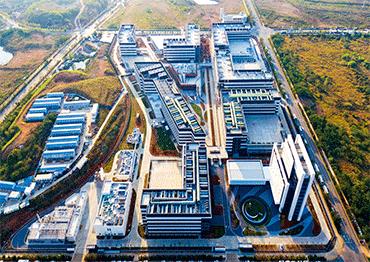
Chinese pharmaceutical firm Wuxi AppleTec’s Central China site Biolake forms part of Wuhan National Bioindustry Base, Wuhan, Hubei Province (Photo by VCG)

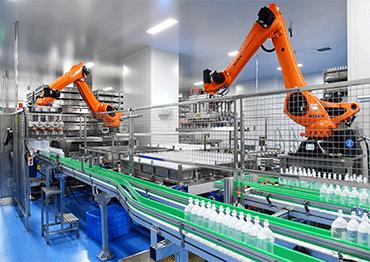
An arm robot works on a production line at a pharmaceutical factory, Shijiazhuang, Hebei Province, July 5, 2024 (Photo by VCG)

Third Catalogue 
To address these issues, healthcare authorities began introducing measures in early 2025. On September 20, the NHSA published new guidelines for the next round of national collective drug procurement that seeks to curb “over-competition,” requiring companies to promise that their quotes would not fall below cost.  

At a January 2025 press conference, the NHSA noted that savings from collective procurement were being used mainly to expand the number of innovative drugs in the national basic insurance catalogue. By July, the agency announced that about 80 percent of innovative drugs had been covered by basic healthcare insurance within just two years of reaching the market.  

Later, the NHSA said that 121 innovative drugs categorized by generic names as of August 12, including five highvalue cell therapy drugs, had passed preliminary assessment for inclusion in the third catalogue.  

This new catalogue would allow innovative drugs not yet covered by basic insurance to reach public hospitals via commercial medical insurance.  

“The new policy is particularly flexible and beneficial to pharmas producing cell or gene therapy drugs priced above 500,000 yuan (US$70,350),” said Jin Chunlin, director of the Shanghai Health Development Research Center.  

At the July press conference, the NHSA also promised that experts from commercial insurance firms would play a major role in price negotiations for drugs listed in the third catalogue.  

Still, questions remain. “It is uncertain whether commercial medical insurance firms can bargain independently or only within government-set price ranges,” an NHSA official told NewsChina anonymously.  

“The authorities should still determine criteria for selecting and pricing innovative drugs in that catalogue,” Jin said.  

Domestic pharmaceutical firms remain cautious about joining the new catalogue due to the small number of people covered by commercial insurance and the difficulty of getting into public hospitals.  

Since 2019, China has adopted two payment systems: Diagnosis Related Groups (DRG) for hospitalized patients and Diagnosis Intervention Packet (DIP) for outpatients. As both aim to control expenditure, hospitals tend to choose inexpensive drugs from NHSA’s first two catalogues.  

In 2024, China’s commercial health insurance spending on innovative drugs and medical devices reached about 12.4 billion yuan (US$1.7b), accounting for less than 8 percent of total medical spending (162 billion yuan or US$23 billion). That rate was 36 percent lower than basic insurance expenses and 41 percent lower than out-of-pocket spending, according to a white paper published in March 2025 by China RE Life, MediTrust Health and Boston Consulting Group. 

Given the diverse goals, financial capacities and operating models of China’s commercial insurance companies, whether State-owned, private or joint ventures, it will be difficult to reach consensus on drug pricing, said Chen Hao, director of the Medicine Policy and Management Research Center at Tongji Medical College, Huazhong University of Science and Technology in Wuhan.  

Song advised that commercial insurers should establish their own payment systems and set drug prices based on market demand and individuals’ ability to pay, rather than administrative control.  

Yang Dajun suggested that the country allow innovative drugs, especially those granted conditional approval by the NMPA, to enter public hospitals as soon as they are eligible for NHSA price negotiations.  

“It’s not only because those drugs are few in number, but also because they meet urgent clinical needs and involve significant technological barriers,” he said.  

Zhu Xun believes much more needs to be done to design a system that balances insurers’ profitability with drug accessibility. Even after innovative drugs are covered by commercial insurance, he said, pharmaceutical companies will still seek inclusion in national health insurance catalogues to secure steady revenue, as most innovative drugs are prescription-only.  

“The solution depends on a sound payment mechanism and smooth hospital access for innovative drugs,” Zhu said.  

Calls to reform pricing and payment systems for innovative drugs have grown louder in recent years, either by overhauling the national medical insurance system or separating hospitals from drug sales.  

But struggling pharmaceutical companies cannot afford to wait for years for such change. For now, their most immediate lifeline may lie overseas.

Print