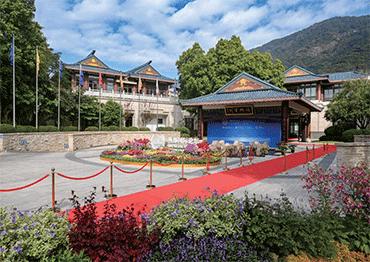
For more than a decade, the international community has been navigating a period of profound transformation. Power relations are shifting, global risks are multiplying, and confidence in multilateral institutions has weakened. In this context, the need for sustained and serious dialogue among major global actors has never been greater. It is precisely under these conditions that the Imperial Springs International Forum (ISIF) has emerged as a unique and increasingly relevant platform for exchange between China and the world.
Since its inception in 2014, ISIF has provided a rare space for frank and in-depth dialogue among former heads of state and government, senior policymakers, leaders of international organisations, and experts from across regions and political traditions. Over the years, more than 200 former heads of state and government, together with leaders of international organisations and hundreds of distinguished figures from diverse sectors, have participated in the Forum. What distinguishes ISIF is not only its continuity, but its deliberate focus on multilateralism, global governance, development, and cooperation at a time when such conversations are often fragmented or politicised.
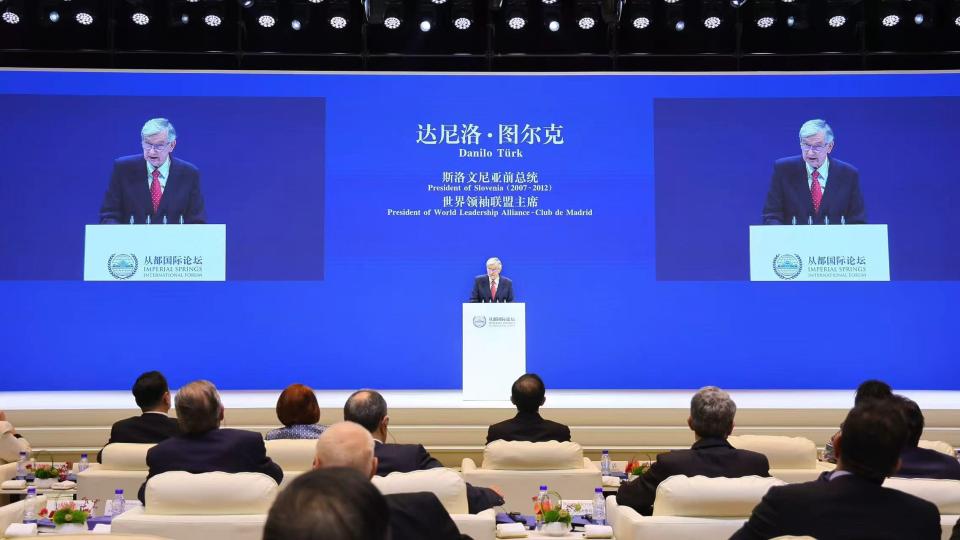
My own engagement with ISIF has unfolded over many years, both as a Member and, more recently, as President of Club de Madrid, a role I have held for the past six years. This dual perspective has allowed me to observe how ISIF has evolved in response to changing global realities, while remaining anchored in its original purpose: fostering meaningful dialogue between China and the international community.
ISIF as a Platform for Dialogue
From the very beginning, ISIF was conceived as more than a conference. It was designed as a platform for listening as much as for speaking, and for building mutual understanding across political, cultural, and institutional divides. This approach reflects a clear recognition that global challenges—whether climate change, economic inequality, pandemics, or security risks—cannot be addressed through unilateral action or selective engagement.
Over the years, ISIF has addressed a wide range of issues central to global governance, including sustainable development, international security, trade and finance, and environmental sustainability. The Forum has consistently encouraged participants to move beyond slogans and explore practical pathways for cooperation. This emphasis on substance has contributed to ISIF’s growing credibility and relevance.
What also sets ISIF apart is the profile of its participants. Former presidents and prime ministers bring a long-term perspective shaped by direct experience in governing under complex and often difficult circumstances. Free from the immediate pressures of office, they are able to reflect more openly on lessons learned, policy failures, and the limits of existing international arrangements. This creates a distinctive environment in which dialogue is informed by experience rather than driven by tactical considerations.
A significant milestone was reached in 2024, when ISIF was held outside China for the first time, with a successful session in Madrid. This step symbolised the Forum’s maturation into a genuinely global platform and underscored the shared commitment of its partners to expanding its international reach. The alternation of venues between China and other countries from 2024 onwards reflects a broader ambition: to embed dialogue with China more firmly within global conversations, rather than treating it as a separate or exceptional track.
Continuity and High-Level Engagement
The development of ISIF has been accompanied by consistent high-level political attention. Between 2017 and 2019, international delegates attending the Forum had the opportunity to meet President Xi Jinping at the Great Hall of the People in Beijing. In 2021, President Xi delivered a video address to the Forum, and in subsequent years he conveyed his engagement through letters to ISIF gatherings.
Such continuity of attention matters. It signals recognition of ISIF as a serious platform for dialogue and provides political space for exchanges that might otherwise be difficult. In a joint letter addressed to President Xi Jinping in November 2025, international dignitaries attending ISIF expressed their appreciation for this sustained support and recalled the Forum’s evolution since 2014 into a leading venue for dialogue between China and the world.
At the same time, ISIF has maintained its non-partisan and dialogical character. It is not a negotiating forum, nor a venue for formal agreements. Its value lies instead in creating an environment where experienced political leaders can reflect openly on global trends, share lessons from their own countries, and engage with Chinese counterparts in a spirit of mutual respect.
Multilateralism under Pressure
The themes discussed at ISIF over the years reflect the broader challenges facing the international system. Multilateralism, long regarded as the foundation of global cooperation, is facing serious pressure. International institutions are often criticised for being slow, ineffective, or disconnected from political realities. In many societies, scepticism towards international cooperation has grown, fuelled by economic uncertainty, social inequality, and political polarisation.
At the same time, unilateral approaches and confrontational ways of thinking have gained ground. Strategic competition between major powers has intensified, and international cooperation is increasingly viewed through the lens of rivalry rather than shared responsibility. These trends pose a direct challenge to the multilateral system that emerged after the Second World War.
From my perspective, one of ISIF’s most valuable contributions has been its insistence on addressing these challenges directly. Rather than idealising multilateralism, discussions at the Forum have focused on its weaknesses and on how it can be strengthened and renewed. This includes examining the role of major powers, the representation of developing countries, and the need for more inclusive and responsive systems of global governance.
ISIF has also provided space to discuss how informal dialogue platforms can complement formal institutions. While organisations such as the United Nations remain indispensable, they often struggle to adapt quickly to new realities. Forums like ISIF can help generate ideas, build trust, and explore policy options that may later inform formal decision-making processes.
China’s Role in the Global System
China’s role in these discussions is unavoidable. As a major economy, a permanent member of the United Nations Security Council, and a central actor in global trade and development, China is an indispensable participant in any serious conversation about the future of global governance.
Engaging with China on these issues is not a matter of endorsement or opposition, but of necessity. Global challenges such as climate change, public health emergencies, financial stability, and sustainable development cannot be addressed effectively without China’s active involvement. Dialogue is therefore not a concession, but a requirement of responsible global leadership.
ISIF has offered a setting in which such engagement can take place in a structured and respectful manner. By bringing together Chinese and international leaders in a non-confrontational environment, the Forum has helped reduce misperceptions and encouraged more nuanced discussions about shared challenges and differing perspectives.
Why Dialogue with China Matters
Club de Madrid’s engagement with China, particularly through ISIF, is grounded in a clear strategic rationale. Dialogue with China is framed within our commitment to multilateralism and global cooperation. The objective is not to interfere in China’s domestic policies, but to include China as a partner in discussions on shared global challenges.
This approach rests on several considerations. First, many of the most pressing global issues—climate change, sustainable development, global health, economic stability—cannot be addressed without China’s active participation. Second, dialogue provides an opportunity to bridge differences, reduce misperceptions, and identify areas of common ground. Third, incorporating diverse perspectives, including those from China, enriches global debates and enhances the legitimacy of multilateral solutions.
These principles are reflected in Club de Madrid’s strategic framework for collaboration with China, which emphasises strengthening multilateralism, promoting global dialogue, advancing sustainable development, and ensuring the inclusion of diverse voices in international decision-making.
Personal Reflections
For me, ISIF has been more than an institutional engagement. Repeated visits to China over the years have deepened my understanding of the country’s transformation and its growing role in global affairs. Each visit has offered new insights, not only into China’s economic and social development, but also into how Chinese policymakers perceive global challenges.
This experience over time has reinforced my belief in the value of sustained dialogue. Short-term engagements or one-off meetings rarely suffice to build trust or genuine understanding. Platforms like ISIF, which bring together the same community of leaders over time, allow for continuity and learning. They make it possible to revisit ideas, reassess assumptions, and adapt to changing circumstances.
Such continuity is particularly important in a world marked by rapid change and frequent crises. Dialogue that is sustained over years, rather than days, creates the conditions for more honest exchange and more realistic assessments of what cooperation can achieve.
Looking Ahead
As global uncertainties continue to mount, the need for platforms that facilitate serious, inclusive dialogue will only increase. ISIF’s evolution over the past decade suggests that it is well placed to contribute to this task. Its decision to alternate between China and international locations enhances its global relevance, while its focus on multilateralism ensures that discussions remain anchored in shared global concerns.
The challenge ahead is to ensure that dialogue translates into understanding, and understanding into cooperation. This is not an easy task, particularly in an era marked by geopolitical rivalry and domestic pressures. Yet, abandoning dialogue is not an option. On the contrary, it is precisely when differences are most pronounced that dialogue becomes most necessary. What we need is careful development of the agenda for our discussions. Issues of international peace and security are becoming ever more complex and difficult to manage. They are taking more and more central role defining the future of the international system as a whole. The expectations of the international community regarding the growing importance of China in peaceful management of the world’s problems are growing. All this is calling for further deepening of the dialogue organized through the Imperial Springs International Forum.
In reflecting on my years of engagement with ISIF, I am convinced that sustained, respectful exchange between China and the rest of the world is an essential component of any viable international order. ISIF does not offer ready-made solutions, but it provides something equally important: a space where solutions can begin to take shape.
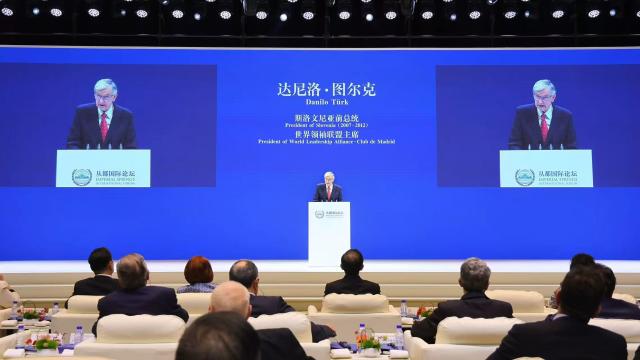
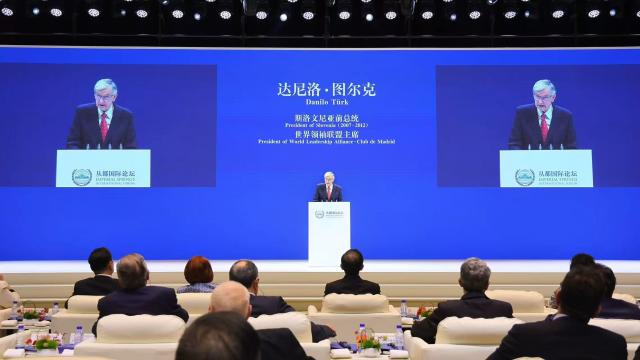
The author is Danilo Türk, President of Slovenia (2007–2012) & President of Club de Madrid
 Old Version