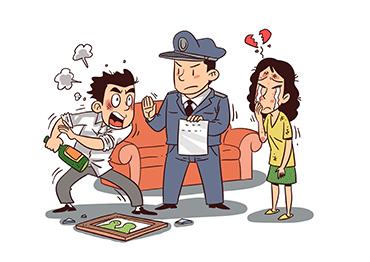
Yu Xun, law professor at East China University of Political Science and Law:“In China’s Criminal Law, the crime of abuse already includes non-physical abuse such as verbal abuse, insults and restriction of personal freedom. But such harm between couples is often neglected because it is difficult to prove, often dismissed as ‘just a quarrel’ or a ‘personality clash.’ However, psychosocial abuse can be extremely harmful, leading to depression or even suicide. Extending legal protections to unmarried cohabiting couples is a mark of progress.” Source: Guangming Daily
He Haiyan, lawyer at Chengdu-based Sichuan Faxian Law Firm:“Article 260 of China’s Criminal Law requires a ‘family member’ relationship to establish the crime of abuse. In the past, cohabiting partners were excluded, allowing some offenders to escape punishment despite causing severe harm to victims. This new interpretation has done away with that gray area. Source: West China Metropolis Daily
Li Qianru, dean of the School of Law, Beijing Union University:“The purpose of the Anti-domestic Violence Law is to eradicate violence in intimate relationships. Emotional attachment, financial dependence and the mindset of ‘family scandals should stay private’ affects unmarried cohabiting relationships as it does in marital ones. Extending protection accords with the spirit of the Anti-domestic Violence Law.” Source: Jiemian News
On November 25, 2025, China’s Supreme People’s Procuratorate (SPP) announced that unmarried cohabiting couples will be legally regarded as family members for the purpose of handling domestic violence cases. Under the change, abuse between cohabiting partners can be prosecuted under domestic violence statutes, extending legal protection beyond married couples.
The move quickly sparked heated discussion online, with netizens divided over whether the change will strengthen protection for victims or make convictions more difficult.
Ge Xiaoyan, deputy procurator-general of the SPP, said the adjustment reflects changing social realities, including the growing number of couples who live together without marrying. The SPP also clarified that domestic violence is not limited to physical harm: emotional and psychological abuse, such as verbal insults and mental coercion, may also qualify.
Prosecutors said they will impose harsher penalties on habitual abusers, particularly in cases linked to alcohol abuse, gambling or drug use. However, the policy applies only to criminal domestic violence cases. In civil matters, cohabitation still does not constitute a family relationship for issues such as property division or inheritance.
The announcement soon became a trending topic on social media. Many netizens questioned whether classifying violence between cohabiting partners as domestic violence could make prosecution more difficult.
Some argued that violence between strangers is usually charged as intentional injury, a crime for which evidence collection and conviction are relatively straightforward. By contrast, domestic violence cases often involve private settings, repeated behavior and limited physical evidence, making them harder to prove. From this perspective, critics worry the change could unintentionally raise barriers to conviction.
Legal experts have pushed back against these concerns, arguing that the comparison oversimplifies how violence cases unfold in practice.
They noted that violence between strangers is often easier to prosecute because victims typically report incidents immediately and physical injuries are clear. Abuse between intimate partners, including unmarried cohabiting couples, tends to be long-term, concealed and frequently involves psychological harm, which is harder to document.
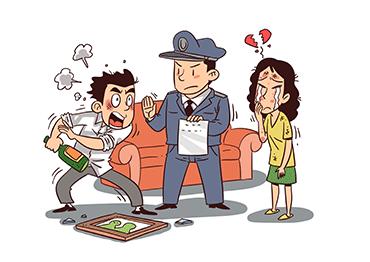
Under China’s Criminal Law, the crime of abuse requires a family relationship, defined by marriage, blood or adoption, between the perpetrator and the victim. Previously, this requirement excluded unmarried cohabiting couples, leaving many victims without adequate legal remedies. Experts say the new interpretation closes this legal gray area and strengthens protection against both physical and non-physical abuse.
 Old Version