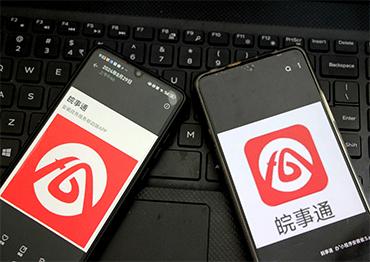
Wang also handles applications for government subsidies for public rental housing. Her work requires her to be familiar not only with the app developed by the city government, but two additional apps from the provincial government with the same functions.
“We’ve all learned how to use the city government’s app, but not many of us know how to use the provincial ones,” she told NewsChina. But they need to keep the provincial apps in case of inspections.
There have been changes. More than half the government apps installed in Wang’s phone have been amalgamated or shut down since the beginning of 2025. She only has about five work-related apps on her phone.
So far, millions of redundant government apps and zombie work chat groups have been cleared out and 50 percent of supervisory and evaluation items have been deleted, the China Organization and Personnel Newspaper reported on November 5, 2025.
By July 2025, authorities in Huzhou, Zhejiang Province had inspected 760 apps operated by city and district authorities. Four months later, 200 apps were deleted or combined, the Huzhou Daily reported on November 3, 2025.
“We targeted three categories of apps – ones with almost zero active users over the past three months, ones that weren’t used much, and apps that contained fragmented and disorganized programs,” Pan Mingjie, director of the Development and Planning Department of the Huzhou Data Bureau, told the Huzhou Daily.
In Guangxi Zhuang Autonomous Region, 118 apps from more than 40 government agencies were integrated into a single platform to provide public services and government administration.
Compared to previous apps which were mostly used by government agencies, the new platform is more comprehensive, providing services for governments, business entities, local residents and visitors, said Wang Haining, manager of Guangxi Zhiguitong Science and Technology, the company that provides technical support for the new platform.
Launched on March 30, 2022, the app has attracted 46.32 million verified users, over 1.7 billion visits and more than 160 enterprise registrations, according to the company website.
In Jiangsu Province, four provincial departments, including the Data Bureau and the Development and Reform Commission, issued a circular on June 27, 2025 to address app redundancies. One of the measures is that administrations below county-level can no longer develop apps.
An executive from a science and technology company in the province, who spoke to NewsChina on condition of anonymity, said that in response to the policy, a majority of government apps had been closed or merged. “We no longer partner with governments to develop administrative apps,” the executive said.
In 2024, Guangdong Province carried out similar policies as well. All government departments in the province were asked to check their apps to see if they are redundant or inefficiently operated. All identical programs had to be amalgamated and all inefficient platforms deleted.
An anonymous executive from a Guangdong-based software development company told NewsChina that most government apps used by city-level departments today are developed and operated by the provincial government. “Administrations below cities won’t launch apps anymore,” he said.

 Old Version