Old Version
International

The ‘Big Year'

From a possible Trump visit to growing tensions over the Taiwan question and Japan and war in the Middle East, China's top diplomat signals that 2026 could be pivotal for China's role in an increasingly turbulent world

By Yu Xiaodong Updated May.1

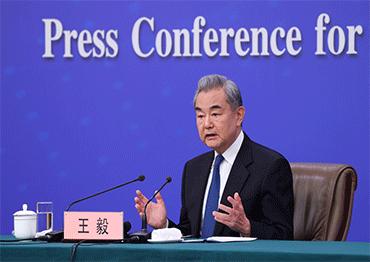
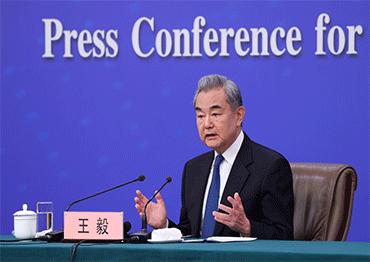
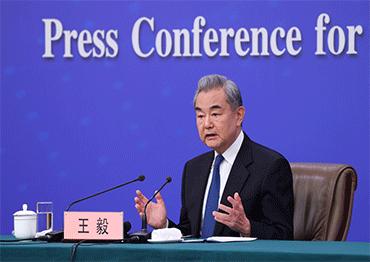
Chinese Foreign Minister Wang Yi, also a member of the Political Bureau of the Communist Party of China Central Committee, answers questions about China’s foreign policy and diplomatic relations at a press conference during the fourth session of the 14th National People’s Congress, March 8, 2026 (Photo by VCG)


On March 12, the two sessions, the annual gatherings of China's top legislative body and political advisory body, concluded in Beijing. A major platform for the Chinese government to lay out its policy direction, the meetings primarily focus on economic development and domestic governance issues. 

Ahead of a widely anticipated visit by US President Donald Trump, which he said on March 17 would be postponed amid the US and Israel's ongoing war with Iran, Beijing's foreign policy posture has drawn heightened attention.

China and the US
At a closely watched press conference held on the sidelines of the two sessions on March 8, Chinese Foreign Minister Wang Yi said that the relationship between China and the US has far-reaching global implications. "Turning our backs on each other would only lead to mutual misperception and miscalculation. Sliding into conflict or confrontation could bring disaster to the world," Wang said. 

Highlighting the important role of "head of state diplomacy," Wang said that the two countries have maintained "good interactions at the top level," and have provided important strategic safeguards for the China-US relationship to improve and move forward. 

Stressing that this year is a "big year" for bilateral relations, Wang said that the agenda of high-level exchanges is already on the table. "What the two sides need to do now is to make thorough preparations accordingly, create a suitable environment, manage the risks that do exist and remove unnecessary disruption" to produce results and achieve consensus that would "make 2026 a landmark year of sound, steady and sustainable development of China-US relations," Wang added. 

Wang's reference to a "big year" is widely interpreted as a subtle signal that preparations for the visit were still moving forward. 

Wang also rejected the idea that global affairs should be handled by a handful of major powers. "China will never take the beaten path of seeking hegemony as its strength grows, nor do we subscribe to the logic that the world can be run by major countries," Wang said in response to a question about the so-called G2 framework for China-US relations. 

The G2 concept first emerged in the 2000s, referring to the idea that the US and China could jointly govern the world, which was revived by Trump ahead of his meeting with Chinese President Xi Jinping in South Korea in October 2025 ahead of the APEC Economic Leaders' Meeting. Wang's comments marked the first time that Beijing explicitly rejected the concept. 

While the US policy of retreating from international treaties and organizations has affected the US's global position, other parts of the world are also in a process of constant restructuring, creating a more multipolar world, Da Wei, director of the Center for International Security and Strategy, Tsinghua University, told The Paper on March 12. 

"China has no interest in filling in the so-called void left by the US, and should not be expected to play such a role," he added, stressing that China supports the principle that global affairs should be dealt with on the basis of joint consultation and participation of all countries. 

For many Chinese analysts, after the Xi-Trump meeting in 2025 that resulted in a trade truce, China-US relations have entered a new phase as Washington started to realize they must deal with China as equals. 

In a commentary released by the Renmin University of China in Beijing on March 8, Lu Donghong, an associate research fellow at the school's Chongyang Institute for Financial Studies, argued that the US had acknowledged in its National Security Strategy report that China-US relations had evolved into "a relationship between near-peer powers." 

"Against this backdrop, the significance of 2026 as a ‘big year' lies in the need for both sides to translate the strategic understandings reached by their leaders into workable institutional arrangements," Lu said. 

On March 15, Chinese Vice Premier He Lifeng held talks with US Treasury Secretary Scott Bessent in Paris, France, paving the way for the anticipated meeting between Xi and Trump. According to He, the two sides "held candid, indepth and constructive exchanges" and reached a series of outcomes in the economic and trade area. But He stressed that China opposes unilateral measures, including the Section 301 investigations the Trump administration launched against 60 economies on March 12, including China. 

Trump's move to delay the visit for "a month or so" has cast a further shadow, as the trajectory of China-US relations now hinges on an increasingly fluid political timetable.

The Taiwan Question
Even if Trump's visit eventually happens, there are issues between the two countries that could potentially derail it. The top issues is the Taiwan question. Beijing insists that adherence to the one-China principle is a prerequisite for any country, including the US, to establish diplomatic relations with China. 

Tensions resurfaced soon after the Xi-Trump meeting in October 2025. In December, Washington announced a potential US$11.1 billion arms sales package to Taiwan, drawing fresh criticism from China and once again putting the issue at the center of China-US relations. 

The divergence between the two sides was also evident during a phone call between Trump and Xi in February. Trump described the exchange as "long and thorough," covering a wide range of issues. Xi, however, focused squarely on the Taiwan question, calling it "the most important issue in China-US relations," urging the US to "handle the issue of arms sales to Taiwan with prudence." 

In the 2026 government work report delivered by Chinese Premier Li Qiang during the National People's Congress session on March 5, China adopted more assertive language on solving the Taiwan question, shifting from previous pledges to "oppose" to vowing to "resolutely fight against separatist forces" and "external interference." 

Wang highlighted the Taiwan question at the press conference. "The Taiwan question is China's internal affair. It is at the core of China's core interests, a red line that must not be crossed or trampled on. Taiwan was recovered by China over 80 years ago, and we will never allow any individual or force to separate it from China again," Wang said. 

"Resolving the Taiwan question and realizing the complete reunification of our motherland is a historic process that cannot be stopped. Those who support it are on the right side of history; those who defy it shall perish," Wang warned. 

Just a few days later on March 11, the US sent P-8A Poseidon aircraft over the Taiwan Strait, prompting China to send its aircraft in response. US media reported that Washington is ready to approve a major US arms package for Taiwan that includes advanced interceptor missiles after Trump's visit to China. With a price tag of about US$14 billion, the arms deal would be the largest ever for Taiwan. It remains unclear how the development will affect Trump's potential trip to China.

On Japan
Another issue highlighted at Wang's press conference was China-Japan relations. Tensions between the two countries have been escalating since Japanese Prime Minister Sanae Takaichi said in November that a "Taiwan contingency" could constitute a "survival-threatening situation," allowing Japan to exercise its right to "collective self-defense." 

On February 24, China announced export controls on "dual-use" items, which are goods with both civilian and military applications, targeting 20 Japanese entities, including Japan's space agency and five subsidiaries of Mitsubishi Heavy Industries. Another 20 Japanese entities were placed on a watch list, subjecting exports that could have military uses to stricter review. 

In response to a question on China- Japan relations, Wang said "the future of China-Japan relations hinges on Japan's choice." "Since Taiwan affairs are purely China's internal affairs, what gives Japan the right to interfere with them? Why is Japan entitled to invoke self-defense if anything happens in China's Taiwan region?" asked Wang, adding that Takaishi's reference to the "right of collective self-defense" is "simply a way to hollow out Japan's pacifist Constitution." 

Highlighting that 2026 marks the 80th anniversary of the opening of the Tokyo Trials and describing the Tokyo Trial as "a litmus test of humanity's conscience, " Wang said "Japan is given another opportunity for serious soulsearching" today. "We hope the Japanese people will keep their eyes wide open and never allow anyone foolish enough to tread the same disastrous path today," Wang added. 

According to Professor Jin Canrong with Renmin Univsersity of China in Beijing, Wang's strong rhetoric underscored both the gravity of current China-Japan tensions and Beijing's determination on the issue. "The message is clear: If Japan misjudges issues such as history and Taiwan and repeats the strategic mistakes of the past, the outcome would be markedly different from that of 80 years ago," Jin said in an interview with domestic media outlet guancha.cn on March 9. 

So far, there has been little indication that the Japanese government intends to walk back its position. Just one day after Wang's press conference on March 9, Japan's Defense Ministry announced that it would deploy homegrown longerrange missiles in the country on March 31, for the first time in the country's post-war history. 

Based in the city of Kumamoto, the Type-12 missiles will have a range of about 1,000 kilometers, putting China's coastline and much of the East China Sea, including the waters northeast of Taiwan, within striking distance. 

How China-Japan relations unfold over the coming months will be closely watched, as 2026 may prove pivotal in shaping the trajectory of one of Asia's most sensitive bilateral ties.

Middle East and Beyond
Addressing the war in the Middle East, Wang called for an immediate ceasefire and an end to hostilities. "This is a war that should not have happened, and it is a war that does no one any good," Wang said. 

After Israeli and US forces launched surprise air strikes against Iran that killed Iran's supreme leader Ayatollah Ali Khamenei and some 40 senior leaders on February 28, China condemned the attack. 

The "blatant attack and killing of a leader of a sovereign state and incitement to regime change are unacceptable," Wang said on March 1, adding that the strikes, which came as Washington and Tehran were in the process of negotiations, were in violation of international law. 

In a phone call with his Iranian counterpart Abbas Araghchi on March 2, Wang said China supports Iran in "safeguarding its sovereignty, security, territorial integrity and national dignity and in upholding its legitimate and lawful rights and interests." 

On March 5, Beijing announced that Zhai Jun, the Chinese government's special envoy on Middle East affairs, will soon visit the region to help ease tensions. 

At the press conference, Wang again called for an immediate end to military operations to "avoid the spiraling escalation of the situation and prevent the conflict from spilling over and spreading." "Might does not make right. The law of the jungle must not return and rule the world. Willful use of force does not prove one's strength," Wang added. 

On Europe, Wang said that China considers Europe "an important force underpinning the stability of the international order" and "a key partner" of China. 

Highlighting the frequent high-level diplomatic interaction between China and European countries in 2025, Wang said China welcomes Europeans stepping out of the "small attic" of protectionism and walking into the "fitness club" of the Chinese market, where they can strengthen and enhance their competitiveness. 

"While visits by European leaders to China reflect a shared willingness on both sides to improve relations, these high-level exchanges should not be an end in themselves. The ultimate success of such visits will depend on whether the two sides can effectively manage their differences and pragmatically deepen cooperation," Da Wei said. 

Responding to a question about the increasing pressure the US put on Latin American and Caribbean countries (LAC) for their relations with China, Wang said that China-LAC cooperation is about mutual help and support between Global South countries, which does not target any third party and should not be subject to interference by any third party. 

"We never engage in geopolitical schemes, nor interfere in other countries' internal affairs, nor ask others to pick sides," Wang said, adding that China stands ready to work with LAC countries, no matter how the situation evolves. 

Wang told press that consultation on the Code of Conduct in the South China Sea (COC) has "reached crunch time" and all relevant parties expect to wrap it up within the year. The COC will provide "the golden rules for the parties to effectively manage differences, build trust and advance cooperation," he said. 

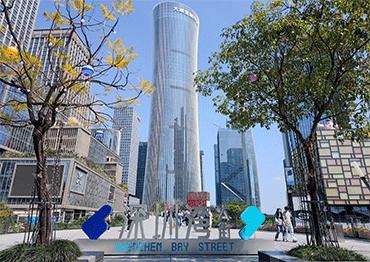
China will host the APEC Economic Leaders' Meeting in November in Shenzhen, Guangdong Province, after having hosted it in Shanghai in 2001 and Beijing in 2014. Wang revealed that under the theme "Building an Asia Pacific Community to Prosper Together," the meeting will "align different pathways toward the Free Trade Area of the Asia Pacific," and over 300 events would be held across the country throughout the year, with contributions from all APEC member economies. 

Wang highlighted China's 15th Five-Year Plan (2026-2030), which he said offers a new blueprint for China's development and a new vision of win-win cooperation with the rest of the world. Wang said the 15th Five-Year Plan has three priorities to create a more favorable environment for China: promoting high-standard opening-up, expanding people-to-people exchanges and developing new windows of connectivity. 

According to Professor Jin, as the world becomes more turbulent, China is facing an even more challenging international environment in 2026. "It is rather clear that the relatively predicable international order we once knew is vanishing, and the world is reverting to the logic of power politics," Jin said. 

"In a new world environment where strength speaks first, China's top priority is to build both domestic and international capabilities so it can engage with the world from a position of confidence," Jin added.

Pictured is Shenzhen Bay Street, March 12, 2026. The 33rd APEC Economic Leaders’ Meeting will be held in November in Shenzhen, Guangdong Province (Photo by VCG)

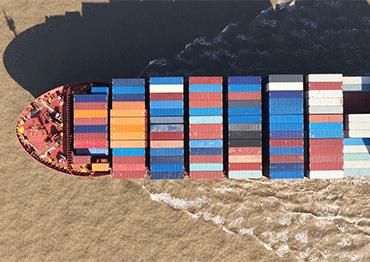
Istanbul Bridge, a ship with a capacity of 4,890 standard containers, ffnishes a three-month round-trip voyage on the newly launched China-Europe Arctic container express route, extending from China’s Ningbo to Felixstowe Port in the UK via the Arctic Ocean. Berthing at Ningbo-Zhoushan Port, Zhejiang Province, December 6, 2025, the container ship is the largest of its kind to have traversed the Arctic (Photo by VCG)

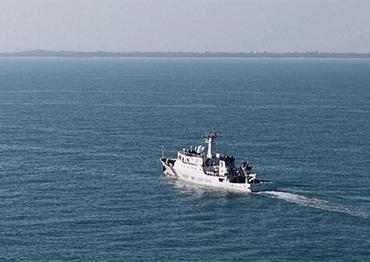
A Chinese coast guard ship conducts a routine patrol in the waters near Kinmen, a group of islets in the Taiwan Strait, February 25, 2026 (Photo by VCG)

Print