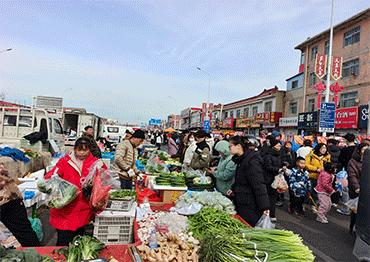
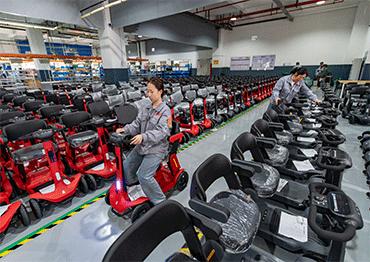
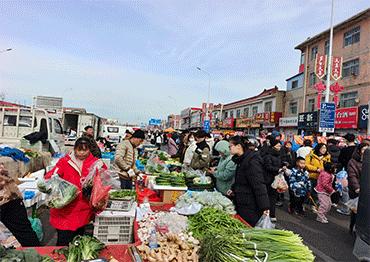
For many economists, the prudence of this year's growth target also stems from weak domestic demand.
According to Zhang Liqun, China's production capacity could support faster growth, but weak domestic demand, reflected in a lack of orders, is holding firms back, creating a mismatch between strong supply and weak demand. The priority, he argued, is to boost demand, unlock supply potential and revive growth momentum.
This perhaps is why the government work report once again places expanding domestic demand at the top of its economic agenda. But this year, the emphasis has shifted subtly. Rather than focusing solely on boosting consumption, policymakers are increasingly concerned with the underlying determinants of spending, particularly household income.
"Macroeconomic analysis cannot focus on aggregates alone," Su Jian said." More important are issues such as the distribution of household and government incomes, the structure of household earnings and unemployment. These factors determine whether people have the capacity to spend, and in turn, whether domestic demand can truly expand."
In the government work report, policymakers pledged to create a comprehensive plan to raise urban and rural household incomes, including measures to boost earnings among low-income groups, expand property income and improve wage and social security systems. For Dong Yu, the emphasis suggests a move from short-term stimulus toward structural solutions. "In the past, the focus was on encouraging consumption," he said. "Now the government is addressing the root of the problem: income."
According to Su Jian, China's past growth model prioritized investment in "things," notably fixed assets, infrastructure and headline GDP expansion. But as the economy matures and the return on such investment diminishes, the next phase of development must focus more on human capital and social welfare, or "investing in people," a concept now increasingly prominent in policy discourse.
"In the past, people were primarily viewed as the means of growth generation," Su said. "As development enters a new stage, more attention must be paid to enhancing people's well-being, which should be the ultimate objective of economic development." Such an approach, he added, entails stronger support for social policies, including education, healthcare, social security, pensions and taxation reforms.
According to the report, the government will create over 12 million new urban jobs and keep the surveyed urban unemployment rate at around 5.5 percent. To achieve these goals, China will adopt its most expansive fiscal policy in recent years, with a targeted deficitto-GDP ratio of 4 percent. For decades, China kept its fiscal deficit below the widely cited 3-percent threshold. The ratio was raised to 3.6 percent during the 2020 pandemic, adjusted to 3.8 percent in 2023, and set at 4 percent in 2025.
For 2026, the government has opted to maintain the deficit at 4 percent, with the absolute shortfall reaching 5.89 trillion yuan (US$855.3b), up from 5.66 trillion yuan (US$823.5b) in 2025 and a historic high. In addition, the government announced it will issue 1.3 trillion yuan (US$188.8b) in ultra-long special treasury bonds, 4.4 trillion yuan (US$638.9b) in local government special bonds, and 300 billion yuan (US$43.6b) in special sovereign bonds.
Including official deficits, the effective scale of fiscal expansion approaches 12 trillion yuan (US$1.7t), which appears to indicate a significant policy shift toward using government spending to directly bolster household income and consumption.
Professor Tian Xuan with Peking University told NewsChina that keeping the 4 percent deficit ratio would both avoid debt risk and secure public spending in key areas to stabilize enterprise investment and household consumption expectations.
 Old Version