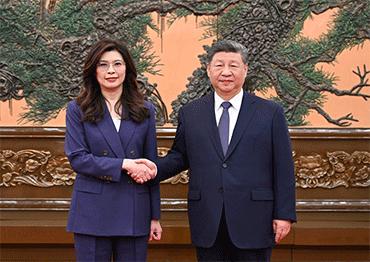
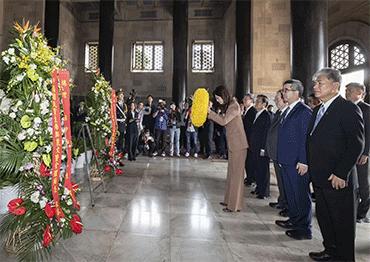
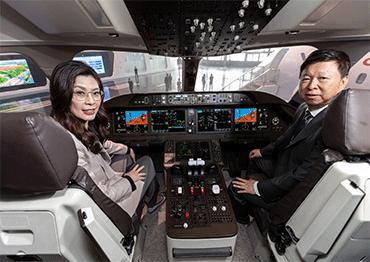
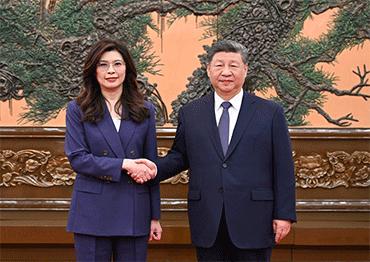
For many observers, Cheng's visit, set against heightened tensions in the Taiwan Strait and ongoing conflict in the Middle East, represents a positive development for cross-Strait stability, offering new possibilities for engagement. However, given her status as an opposition figure, its overall impact is likely to be limited.
Cheng is expected to face strong resistance, not only from the DPP but also from within the KMT. It remains unclear whether the party will be able to return to power in the 2028 general election, which she has said it is aiming to win.
Prior to her trip, Taiwan's Mainland Affairs Council warned that she could face a maximum sentence of five years in prison if she engaged in behavior deemed to have "crossed the line." DPP politicians have also called for extending existing restrictions, currently applied to serving and retired public servants traveling to the Chinese mainland, to individuals with "significant political influence."
According to Lei Qian, chairperson of the Chinese Women's Association in Taiwan and a political commentator, Cheng Li-wun's visit highlights the presence of strong voices within Taiwan that oppose independence to the international community.
"In the past, regardless of how many people in Taiwan opposed Lai Ching-te's stance, international media narratives have largely reflected the line defined by the DPP, creating the impression that Taiwan as a whole supports that direction," Lei said in an episode of online program Cross-Strait Roundtable on April 9. "In reality, Taiwan encompasses a wide spectrum of views, and many do not endorse the DPP's approach, although these voices are far less audible internationally."
Lei added that a key factor is the influence the US exerts over Taiwan's politics. "All major political parties in Taiwan operate on the assumption that it is very difficult to win a leadership election without US support," Lei said in a separate interview with domestic media guancha.cn on April 10, adding that both the DPP and KMT have sought to strengthen ties with Washington, which she said favors a certain level of tension in the Taiwan Strait over the long term.
Lei said what distinguishes Cheng is her emphasis on greater autonomy for Taiwan in handling cross-Strait relations. "In the past, pro-US factions within the KMT have wielded considerable influence over cross-Strait policy," he said. "But Cheng has made her position clear: She favors addressing cross-Strait issues through Taiwan's own initiatives and goodwill, rather than allowing them to be entirely shaped by international narratives."
For mainland observers, the latest cross-Strait interaction indicates that reunification has become an irreversible historical trend, given the Chinese mainland's growing economic scale, technological capacity and military modernization. The visit also provides an opportunity to showcase potential benefits for Taiwan in the context of unification.
On April 15, Chen Binhua reiterated in a press conference that, after peaceful reunification, people in Taiwan can enjoy improved social welfare, as the region will no longer need to use fiscal revenues for defense expenditures and can instead direct them toward improving livelihoods.
"Xi's remarks show that the Chinese mainland continues to adopt a proactive and engaged approach toward Taiwan policy," Liu Xiangping, director of the Taiwan Research Institute at Nanjing University, told NewsChina. He urged more people in Taiwan to recognize that Taiwan's future is tied to the strength of the mainland, and that their well-being is tied to the rejuvenation of the Chinese nation.
 Old Version