hina marked a milestone in the country's ecological governance in March with its new Ecological and Environmental Code.
Adopted at the fourth session of the 14th National People's Congress, the Code establishes a comprehensive legal framework for ecological and environmental protection, laying a solid foundation for China's sustainable development.
The Code includes 1,242 articles across five sections covering all aspects of ecological and environmental protection, from pollution controls and low-carbon development to legal liabilities.
In an April interview with NewsChina, Professor Chen Haisong of Wuhan University, who was deeply involved in drafting the Code, highlighted that the Code features institutional arrangements that protect cross-sector ecological and environmental rights, an approach that emphasizes inclusiveness, equity and sustainability to better safeguard the public.
NewsChina: How has China's environmental and resource legislation evolved, and when did calls for environmental codification first emerge?
Chen Haisong: Key milestones in China's environmental legislation include the 1979 trial enactment, the 1989 formal promulgation and the 2014 revision of the Environmental Protection Law, reflecting its gradual improvement.
Calls for environmental codification emerged nearly 20 years ago. Academic debate began around 2008, drawing on examples from France, Sweden and other countries with environmental codes. Around 2017, Professor Lü Zhongmei [a leading figure in China's environmental law and ecological civilization construction who currently serves as Vice Chairperson of NPC's Environment and Resources Protection Committee] led the development of an expert draft under the Environmental and Resource Law Society of the China Law Society.
Codification was officially launched in 2022 following guidance from central authorities, with a leading group and task force established in 2023. As a task force member, I primarily drafted the General Provisions and Legal Liability sections of the Code.
NC: What is the practical purpose of codification?
CH: China has long had a relatively comprehensive legal framework for ecological and environmental protection, comprising over 30 laws, more than 100 administrative regulations and over 1,000 local regulations.
This codification represents a major, systematic legislative effort: it consolidates, revises and upgrades existing environmental legal norms, and codifies ecological civilization theories, institutions and practices developed since the 18th Communist Party of China (CPC) National Congress (in November 2012), with profound and far-reaching significance.
However, as ecological governance deepens, existing laws suffer from weak coherence and coordination. Overlaps, gaps and conflicts between regulatory regimes have caused fragmented governance, which is ill-suited to modern systematic approaches. Many emerging environmental issues lack clear legal support, and piecemeal amendments have failed to produce synergistic effects. For instance, large parts of the Environmental Protection Law were outdated and superseded by later special laws - the ecological damage compensation system was not provided for in the current law. Pilot and formal reform plans issued in 2015 and 2017 attempted to remedy the lack of legal redress for public ecological harm.
To meet urgent environmental needs and public expectations for a better ecosystem, codification has become a key political and legislative task assigned by the Central Committee of the CPC. Its goals are to integrate scattered legal resources, clarify regulatory responsibilities and strengthen the authority and enforceability of environmental legislation.
NC: What major breakthroughs in the Code directly affect public life?
CH: Article 1 of the General Provisions explicitly stipulates the protection of public health and ecological environmental rights as the Code's fundamental purpose, embodying the core goal of environmental law and affirming ecological civilization values. Article 5 defines a healthy ecological environment as the most inclusive form of public welfare, outlining the basic path to realizing environmental rights.
Substantively, the Code strengthens public rights to environmental information, participation and supervision. It prioritizes issues closely tied to public health, including agricultural and rural pollution, emerging pollutants, noise, cooking fumes and light pollution. For judicial relief, it improves ecological damage compensation and environmental public interest litigation to better safeguard public environmental interests. In enforcement, it tightens legal liability, imposes severe penalties on fraudulent third-party agencies and follows the principle that penalties should match the nature, circumstances and harm of the violation.
NC: What are the key legislative highlights of the Code that protect public wellbeing? Can you give examples?
CH: The Code places the Pollution Prevention and Control section immediately after the General Provisions, reflecting its priority status. This structure responds to public concern, as environmental pollution most directly affects public health, wellbeing and people's sense of happiness and security.
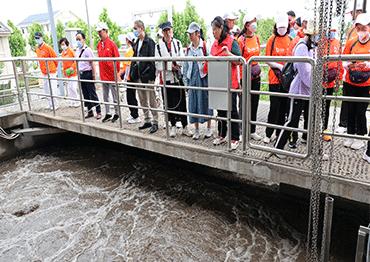
For example, it systematically governs agricultural and rural pollution by integrating general rules into the Pollution Prevention and Control section, with targeted rules for air, water, marine, soil and solid waste pollution. Measures include increased funding for agricultural and rural pollution control, cleanup of severely polluted water in rural and urban areas, and rural toilet renovation tailored to local conditions.
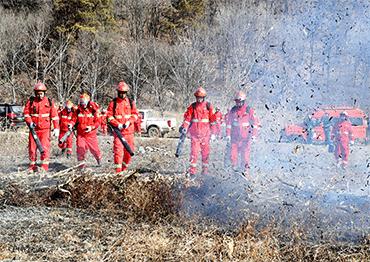
The Code also refines straw-burning rules. While open burning remains banned in densely populated areas, airports and major transport corridors, it corrects rigid, one-size-fits-all enforcement. It requires local governments to manage straw burning scientifically and permits open burning outside provincially designated restricted zones and periods, allowing more flexible, targeted regulation.
A major highlight is the strict legal regulation of emerging pollutants, which directly impacts public physical and mental health.
NC: What categories of chemicals are considered emerging pollutants under the Code?
CH: Most of these chemicals exhibit biotoxicity, environmental persistence and bioaccumulation, posing severe ecological and health risks yet insufficiently regulated under routine environmental management. The Code institutes comprehensive risk control, establishes a coordinated governance and risk management system for emerging pollutants, and sets corresponding legal liabilities. These cover violations such as producing or importing chemicals listed in the 2023 edition of the Priority Controlled Emerging Pollutants List (released by the Chinese Ministry of Ecology and Environment) in violation of prohibition or restriction measures, producing or importing new chemicals without required environmental registration certificates or in noncompliance with certificate terms, and unauthorized use of related products. It also formalizes a national coordinated governance system for persistent organic pollutants (POPs).
The drafting team adopted a pragmatic approach, balancing scientific certainty, industrial adaptability and international negotiation progress. For instance, microplastics were not subject to rigid regulation due to ongoing debates over their risks and unsettled international conventions. Instead, priority was given to POPs, which are covered by international treaties and supported by mature domestic governance practices. This approach upholds the rule of law while leaving space for future regulatory refinement.
With no prior legal provisions in these areas, the Legal Liability and Supplementary Provisions sections define clear fine ranges and penalty measures tied to the value of goods, ensuring enforceable law enforcement.
NC: Can you explain what "moderate codification" means in the context of the new Code?
CH: Given the broad scope of ecological and environmental work, which covers pollution control, resource conservation, ecological security and green low-carbon development, a flexible, categorized "moderate codification" strategy was adopted.
Ten core laws, including the Environmental Protection Law, have been fully revised, integrated into the Code, and will be repealed upon its entry into force. Key provisions of basin laws (such as Yangtze and Yellow River protection laws) and resource laws (forests and grasslands, for example) are incorporated, while standalone laws remain to preserve their specificity and stability. For emerging fields such as carbon peaking and neutrality, only principled provisions are included to guide future progress.
This has formed a "dual legal sources" structure. Some ecological protection laws are highly policy- and technical-dependent and lack stability, so they cannot be fully codified. They are either partially included or retained as separate statutes, resulting in the parallel application of the Code and standalone laws.
NC: What challenges arise from the "dual legal sources" framework, and how should they be addressed?
CH: The main challenge is coordinating legal application. Safeguarding the Code's foundational role and avoiding conflicts with separate laws is unprecedented and requires careful resolution.
This will be addressed mainly through legislative techniques: Conflicting provisions are revised where possible, and the Code's priority of application is clearly defined. For unresolved conflicts in separate laws, legislative interpretations and application guidelines will be issued. For example, the part covering sustainable use of natural resources balances the Code with existing standalone laws, supporting systematic ecological protection while respecting current rules.
NC: What was the biggest difficulty in compiling the Legal Liability section, and what is the current status of its revision?
CH: The greatest difficulty was coordinating interdepartmental responsibilities and ensuring enforceable provisions. Legal liability requires clear division of jurisdiction among enforcement agencies, leading to repeated revisions and cumbersome coordination. For example, motor vehicles and vessels were initially included in air pollution rules, but "vessels" was removed after objections from the Ministry of Transport, which deemed ship pollution penalties outside the Ministry of Ecology and Environment's jurisdiction.
While the first four sections now only require minor textual tweaks, the Legal Liability section is still being revised, with a focus on improving enforceability. Even minor wording changes can affect application, so we have refined details repeatedly with the Ministry of Ecology and Environment, the Supreme People's Court and other agencies to align the provisions with legislative logic and real-world enforcement.
NC: What supporting measures are needed to ensure effective implementation after the Code takes effect on August 15?
CH: Implementing the Code is just the first step, and extensive follow-up work remains.
First, we will issue official interpretations and application guidelines. Our team is developing article-by-article comparisons and explanatory materials covering legislative background and application scope to help enforcement and judicial staff understand key changes, as even minor wording revisions can significantly alter meaning.
Second, supporting regulations will be improved. The Supreme People's Court will issue judicial interpretations, the State Council and relevant agencies will develop enforcement discretion standards and exemption lists to standardize law enforcement, and local governments will review and revise local regulations to align with the Code.
Third, publicity and training will be strengthened to ensure the public, law enforcement and judiciary understand the Code's logic and core content, preventing implementation problems caused by misinterpretation.
While many regions are awaiting formal guidance, our team is proactively preparing basic materials and technical support for local authorities, bridging legislation and practice.
NC: Having participated in drafting the Code, what are your expectations for it in the coming years?
CH: As a key legal achievement in China's ecological civilization, the Code marks a new stage of systematic, standardized environmental governance. In the coming years, we will refine its provisions through supporting laws and rules while upholding its authority. My main hope is that it will be fully implemented, resolve legislative fragmentation, meet green development needs and provide strong legal support for building a beautiful China.
Our team will continue providing interpretive and technical support to ensure effective implementation and advance the modernization of China's ecological and environmental governance system and capacity.
 Old Version