Old Version
Cover Story

New Paradigm

With the historic meeting between Chinese President Xi Jinping and US President Donald J. Trump, the China-US relationship is showing signs of a complex recalibration toward stability

By Yu Xiaodong Updated Jul.1

US President Donald Trump made a high-profile state visit to China from May 13 to 15, the first visit by a sitting American president since Trump's last visit to the country nine years ago, during his first term in 2017. Former president Joe Biden did not travel to China during his four years in office. 

Trump's visit comes after nearly a decade of mounting tensions between the world's two largest economies. Since Trump launched a trade war against China in 2018 during his first presidency, China-US relations have increasingly been shaped by tariff hikes, trade sanctions, technology bans and spats over the South China Sea and the Taiwan question. 

After returning to the White House in January 2025, Trump doubled down on his tough approach against China, prompting strong countermeasures from China, including reciprocal punitive tariffs and tightened controls on critical mineral exports. The two sides eventually managed to reach a temporary truce in the escalating trade war after Trump and Chinese President Xi Jinping met in Busan, South Korea, on October 30, 2025. The Busan Summit, held on the sidelines of the Asia-Pacific Economic Cooperation (APEC) Leaders' Meeting, paved the way for Trump's long-anticipated visit to China, which was initially scheduled in March, but later postponed to May due to the Middle East conflict. 

During the visit, the two leaders agreed to build a "constructive China- US relationship of strategic stability." This is "the most important political understanding they reached," Chinese Foreign Minister Wang Yi said in a briefing about the visit on May 15. 

However, given the structural disputes between the two countries, few expected that Trump's visit would see a dramatic breakthrough in bilateral relations. As experts pointed out, it is not realistic to believe that a single trip could fundamentally reset the world's most important bilateral relationship.

‘Head of State Diplomacy'
President Xi Jinping welcomed Trump with a grand ceremony outside the Great Hall of the People on May 14, featuring a red-carpet reception, honor guard, national flags and Chinese school children waving flowers and the flags of both countries. He also accompanied Trump to Beijing's ancient Temple of Heaven, where the two leaders toured the Hall of Prayer for Good Harvests. As a site historically associated with the cosmic order, where emperors from the Ming and Qing dynasties (1368-1911) prayed for good harvests and peace, the setting is widely seen as projecting a message of harmony and stability at a time of heightened geopolitical tensions. 

For many Chinese observers, even in the absence of headline-grabbing deals, the symbolism of Trump's visit is significant, reflecting what they see as China's broader effort to redefine the framework of China-US relations in a more constructive light. 

In recent years, China has repeatedly emphasized the role of "head-of-state diplomacy" in handling China-US relations, stressing that direct communication between top leaders can play a strategic and stabilizing role. As political trust between China and the US gradually eroded, Chinese officials argued that communication at bureaucratic levels had become insufficient to prevent miscalculation, and direct engagement between the two heads of state is essential for setting the overall tone and strategic direction of the relationship. 

In an exclusive interview with Newsweek on May 5, Chinese Ambassador to the US Xie Feng noted the close communication between Xi and Trump since last year, which has included five phone talks, exchange of multiple letters, the successful summit in Busan, has been "recalibrating the course of the China-US relationship and steering it toward overall stability." 

"While the US tends to approach China-US relations in a more transactional manner, focusing on specific issues, China places greater emphasis on the broader strategic framework of the relationship," Professor Li Cheng, founding director of the Center on Contemporary China and the World (CCCW) at the University of Hong Kong, told NewsChina. 

"In the context of this summit, Trump was primarily concerned with concrete issues such as tariffs, trade, and regional conflicts. For the Chinese leadership, however, while these issues are important, the more critical question is strategic positioning - namely, whether the US ultimately views China as a friend, a partner, a competitor or an enemy," Li said. 

Li argued that while a summit alone cannot fundamentally reset China-US relations, it can at least prevent the relationship from going into "free fall." "As long as leader-level communication remains intact, dialogue and cooperation in areas such as trade, education and people-to-people exchanges can continue," Li said, "Without that, bilateral ties could deteriorate much more rapidly."

‘Constructive Strategic Stability'
In his opening remarks during talks with Trump, President Xi raised a series of broader questions about the future trajectory of China-US relations. 

"Can China and the US overcome the Thucydides Trap and create a new paradigm of major-country relations? Can we meet global challenges together and provide greater stability for the world? Can we build a bright future for our bilateral relations in the interest of the wellbeing of the two peoples and the future of humanity?" Xi asked.
 
The Thucydides Trap Xi referenced refers to a theory that tensions between a rising power and the established dominant power could lead to violent conflict. The concept derives from the ancient Greek historian Thucydides (c460-400 BCE), who wrote in his History of the Peloponnesian War that "It was the rise of Athens and the fear that this instilled in Sparta that made war inevitable." 

The theory was later popularized by political scientist Graham Allison in his 2017 book Destined for War: Can America and China Escape Thucydides's Trap? and has since become a major reference point in debates over the future trajectory of China-US relations. 

For Xi, the question ultimately requires a strategic choice from Washington. These were "questions vital to history, to the world and to the people," Xi said. Xi added that he was "ready to work together with President Trump to set the course and steer the giant ship of China-US relations," expressing hope that 2026 could become "a historic, landmark year that opens up a new chapter in China-US relations." 

Xi said that the constructive China- US relationship of strategic stability "should be a positive stability with cooperation as the mainstay, a sound stability with moderate competition, a constant stability with manageable differences, and an enduring stability with promises of peace," according to China's Xinhu News Agency. 

Shen Yi, a professor and executive director at the Center for National Security Studies at Shanghai's Fudan University, called this articulation "the most significant and consequential outcome" of the summit. The concept provides a new positioning for bilateral ties and is likely to serve as a strategic guide for China-US relations over the next three years and beyond," Shen said in a podcast released on May 16. 

The concept of strategic stability was developed during the Cold War to prevent nuclear confrontation between the US and the former Soviet Union. President Xi's proposal, he argued, represents an evolution of this traditional idea, extending it beyond the narrow scope of military security into the broader framework of overall major-power relations. 

For years, China has resisted Washington's efforts to frame the bilateral relationship as fundamentally competitive. Instead, Beijing has advanced concepts such as a "new type of major-country relations" and "win-win cooperation" to define ties with the US, which Washington has largely rejected, perceiving it as China's attempt to challenge US dominance in international order. 

Against this backdrop, the new concept of "constructive strategic stability" appears more calibrated and pragmatic. It acknowledges enduring competition while attempting to prevent the two sides from sliding into direct confrontation. 

"It emphasizes stability, but not as a means of freezing existing contradictions. It accepts that competition between China and the US is a long-term reality, but insists that such competition must remain bounded and controllable. It acknowledges differences, but stresses that they must not be allowed to escalate into systemic crisis," Shen said. "And while it speaks of peace, it does not define peace as mere non-conflict. Rather, it sees peace as something that must be actively constructed through sustained dialogue, cooperation and mutual adjustment," he added.

The Taiwan Question
China's message is clear: It does not expect the US to end competition, but holds that competition must remain controlled and not spill recklessly into areas it regards as "core interests," above all Taiwan. 

During his meeting with Trump, Xi reiterated that Taiwan is "the most important issue" in China-US relations. "If it is handled properly, the bilateral relationship will enjoy overall stability. Otherwise, the two countries will have clashes and even conflicts, putting the entire relationship in great jeopardy," Xi said, adding that "Taiwan independence" and cross-Strait peace are as irreconcilable as fire and water. 

Trump noticeably projected a more measured tone during his visit to China, focusing far more on cooperation, dialogue, stability and continued communication, than on disputes between the two countries. 

On Taiwan, Trump said in an interview with Fox News in Beijing that Taiwan should not expect a "blank check" from the US military, warning against Taiwan declaring independence. "We're not supposed to travel 9,500 miles to fight a war. I'm not looking for that," Trump said. 

However, there is no sign that Washington is changing its policy of "strategic ambiguity." on Taiwan. Acknowledging that Xi "feels very strongly" on Taiwan, Trump told reporters on his way back to the US on May 15 that he "made no commitment either way" on the issue, and he would make a decision soon over a planned US$14 billion arms deal with the island. 

The deal was approved by the US Congress in January, and has yet to be signed off by the Trump administration. It builds upon a separate US$11 billion arms package the Trump administration approved in December 2025.

‘Implicit Understandings'
Beyond symbolism, the summit did lead to some concrete results. On May 17, China's Ministry of Commerce disclosed preliminary outcomes of China- US economic and trade consultations held in South Korea from May 12 to 13. According to Xinhua News Agency, The two sides will establish a China-US council of trade and a council of investment. They have agreed in principle to discuss a reciprocal tariff reduction framework arrangement on products of equivalent scale, which is worth US$30 billion or more on each side. The products of respective concern as agreed by both sides are expected to enjoy most-favored-nation tariff rates or even lower rates. China will purchase 200 Boeing aircraft and the US will guarantee China a sufficient supply of engines and spare parts. The two sides also achieved positive outcomes in the agricultural sector and reached multiple consensuses on the issue of two-way market access for agricultural products, including dairy, poultry and beef. On export controls on rare earths and other critical minerals, the ministry noted that China implements such measures in accordance with laws and regulations, and reviews license applications that are compliant and for civilian use. 

The White House released a fact sheet on Trump's visit also on May 17, including China's agreement to address the US concerns over critical minerals, the purchase of 200 American-made Boeing aircraft for Chinese airlines and at least US$17 billion of agricultural products per year from 2026 to 2028, and resumed market access for US beef and poultry. 

On May 15, China's Foreign Minister also confirmed that Xi had accepted Trump's invitation and would visit the US in September. It will be the first state visit by a Chinese leader in more than a decade. Xi paid his first state visit to the US in September 2015 at the invitation of the then US President Barack Obama. 

As the two sides have pledged to support each other in holding the APEC Leaders' Meeting scheduled for November 18-19 in Shenzhen, South China's Guangdong Province, and at the G20 summit on December 14-15 in Miami, Florida, they could meet up to four times in 2026, creating unusually frequent high-level contact that opens further space for negotiation, coordination and risk management in an otherwise tense bilateral relationship. 

According to Zheng Yongnian, a political science professor at the Chinese University of Hong Kong (Shenzhen), years of strategic interaction between China and the US, marked by trial and error, have left both sides more familiar with each other's modes of engagement, giving shape to a basic framework for interaction and cooperation. 

"Since Trump's first term, successive US administrations have sought to pursue economic ‘decoupling' from China, using a range of policy tools and sustained pressure, yet these efforts have not delivered the expected results," Zheng said in an interview with GBA Dialogue, an online political commentary platform established by the Chinese University of Hong Kong, on May 11. 

He added that the two sides have, in practice, developed a set of "implicit understandings," in which cooperation is seen as beneficial to both countries while confrontation leads to mutual losses.

Teenagers from China and the United States sing during the closing performance of Bond with Kuliang: 2025 China-US Youth Choir Festival, with the theme of "Singing for Peace," at China National Opera House, Beijing, July 16, 2025 (Photo by Xinhua)

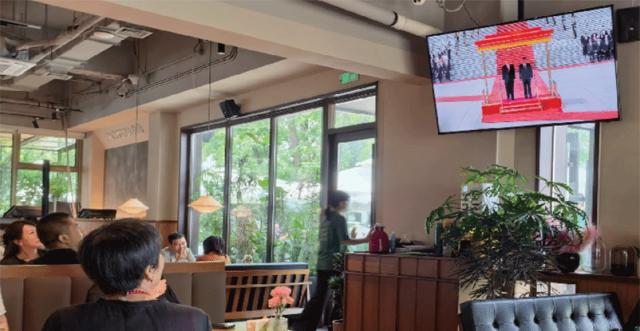
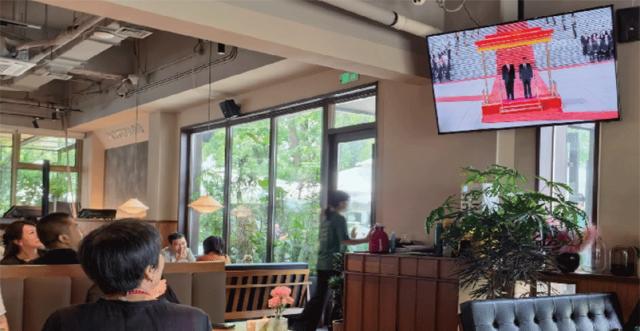
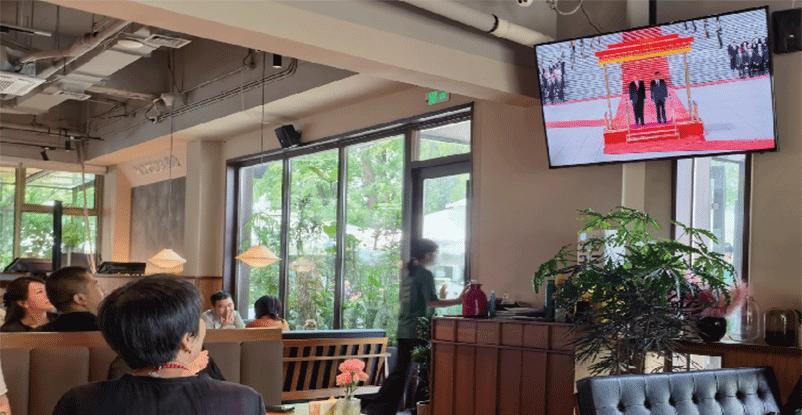
Diners at a Beijing restaurant watch a TV report covering the state visit of US President Donald Trump to China, May 14, 2026 (Photo by CNS)

Print