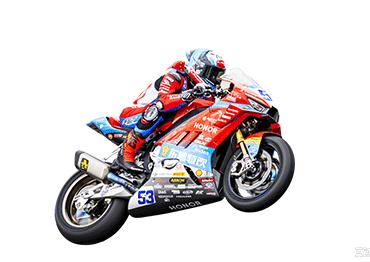
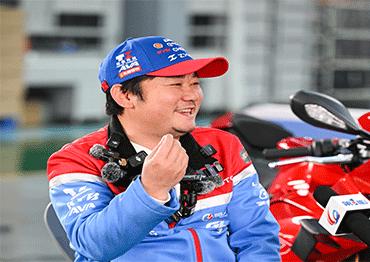
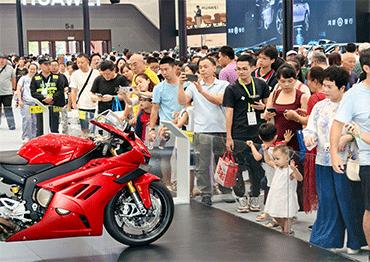
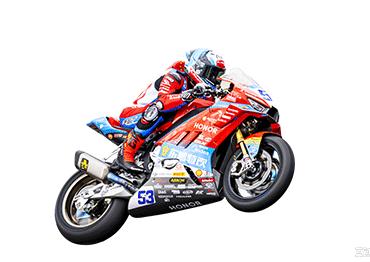
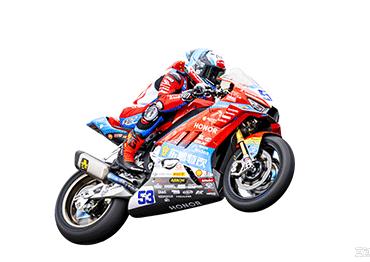
After ZXMOTO's first victories in the WorldSBK, media quoted Zhang Xue as saying that "in the next five years, we will take over more than 50 percent of the large-displacement market share from international brands." In February, Zhang set a goal of at least doubling retail sales in China in 2026.
ZXMOTO's disclosed supply chain data shows that the 820RR base model is 97 percent domestically sourced, with 100 percent self-sufficiency in engines, electronics and frame, indicating a solid foundation for motorcycle manufacturing in China. Its victory and popularity are expected to benefit the Chinese industry as a whole.
"Its win will no doubt boost the brand image of domestic motorcycle manufacturers. There are more short video reviews of ZXMOTO on social media and its orders are increasing," said Zhang Wei, a motorbike enthusiast based in Beijing. He said review videos show that ZXMOTO's motorcycles are definitely among the best in China.
Zhang Wei bought a domestically produced motorcycle two years ago and found the quality was better than he expected. "Domestic motorcycles are much better than they were 10 years ago," he said.
But he noted that ZXMOTO alone cannot change the domestic industry. Before Zhang Xue and his company went viral, domestic motorcycle manufacturers had been stuck with the "low-end" label.
Zonsen engineer Zhao Jiang, a witness to how Chinese motorcycle companies explored overseas markets, said the domestic motorcycle industry started with the Chongqing-based Jialing Factory's success in assembling the CJ50, a 50cc moped, by copying from Honda motorcycles it bought from Japan in 1979. Before that, motorcycles were rare and mainly for military use.
Later, Jialing and Honda established the joint venture Jialing-Honda Motors Company. Jialing paid commission to Honda for every bike sold. The factory introduced Honda production lines, and adhered to the Japanese producer's standards.
"At that time, the overseas market was basically dominated by Japanese companies. Jialing looked at where Honda sold well and put forward appropriate models," Zhao said.
The industry was very successful, and by 1993, China overtook Japan to become the world's largest motorcycle producer.
But at the same time, urban motorbike bans started to shrink domestic demand. Manufacturers increasingly looked overseas to absorb excess capacity. By 1997, Chinese manufacturers led by Jialing opened up the market in Vietnam, undercutting Japanese models by half. For a time, Chinese companies accounted for 80 percent of the Vietnam market, squeezing out giants like Honda and Yamaha.
But the good times did not last. Without core technology and brand awareness, some companies started price wars, and lowered profits left little room for quality or service investment. Some firms cut corners on frame thickness, key components and brakes, and product quality plummeted, while after-sales services were largely absent. China-made bikes started getting negative reviews, while Japanese brands raised their game, recapturing nearly all their lost ground by 2005.
Since then, domestic brands started to focus on improving product quality, increasing R&D investment and optimizing overseas services, with an eye on more exports. In 2025, China's exports of motorcycles reached 13.37 million, continuing its first place in global export volume that it has held for at least 20 years since it overtook Japan again.
Factories specialize in almost every part, which is why the industry is so efficient and low cost, Zhao Jiang noted.
Yet Chinese motorcycle manufacturers invest too little in brand establishment. "Japanese companies started out by copying too," Zhao said. Some companies, like Zonsen, started out by producing their own engines and selling them to other motorcycle brands, not paying enough attention to brand-building.
The situation in India is different, Zhao said. "Indian companies rarely do OEM work. They focus on building their own brands overseas. Despite higher initial costs, this strategy gives them a longterm advantage in certain foreign markets," he said.
Li Yao of Zonsen suggested enhancing top-level design to build brands overseas, through special funding to support globalization or by buying internationally known brands.
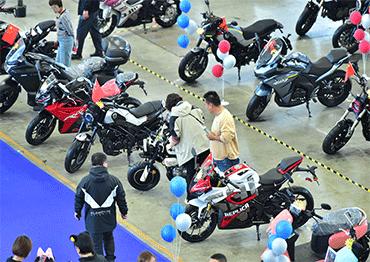
Currently, exports of Chinese motorbikes account for over half of total sales. Some of the biggest export markets include Southeast Asia, Latin America and Africa.
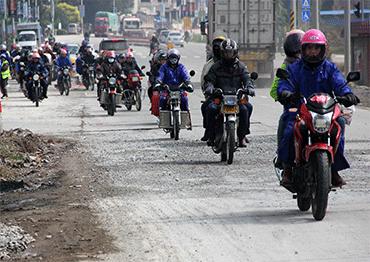
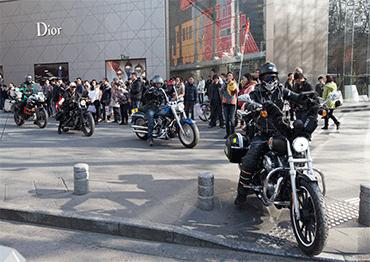
Given the relatively slow growth in domestic sales, industry insiders and economists are calling to lift motorbike bans in cities to boost domestic demand.
Professor Li Daokui with Tsinghua University noted in a video on WeChat the significance of providing a supportive environment for entrepreneurs like Zhang Xue. He called for changing bans in over 100 cities and scrapping the policy that bikes over 13 years old or with 120,000 kilometers must be retired. This would stimulate industry development and increase demand.
"These policies made sense at the time out of safety and environmental protection concerns. But the problems have fundamentally changed or are better addressed today," Li Daokui said, who is an avid motorcycle rider. He suggested shifting the focus of management from motorcycles to drivers and making reforms to driving licenses to ensure safety. He also advised adopting a more thorough vehicle inspection system to phase out motorcycles that exceed emission standards or are unsafe.
"It will stimulate the development of the motorcycle industry and related industries and make motorcycle companies more motivated to develop high-end motorcycles, changing the status quo where the global high-end market is dominated by foreign brands," Li Daokui said.
 Old Version