f I close my eyes, I can still remember my first proper coffee-chain experience. The year was 2002, and a group of students in one of my Alevel classes were getting ready to go to a mythical place called Starbucks for coffee and a round of Jenga. Looking back, this moment captures the most important rule of coffee commerce: coffee is not just a product, it is an experience.
That simple truth is now powering a 369 billion yuan (US$54.3b) industry in China. Over the past few years, China's growing coffee market has reshaped how people spend time in cities, given a healthy boost to rural areas, and become one of the first things I look up in a new city after I've found a good gym to go to.
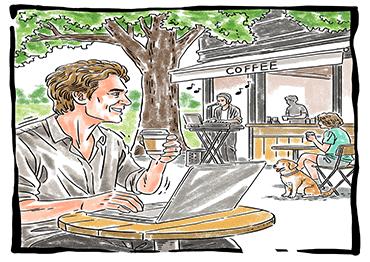
As I write this, I am sitting in a coffee shop beside Chaoyang Park in Beijing. It is a natural, grassy outdoor setting that makes thoughtful use of its surroundings. There is outdoor seating beneath the trees, it is dog-friendly always a plus in my book and a DJ is playing a short distance away. It is the sort of place that shows why coffee has become so much more than just a pick-me-up.
And these sorts of experiences are popping up all over China.
And the unique experiences extend to the product as well. Last year, while travelling in Guangdong Province, I found a lovely spot by a lake offering a doufunao latte. Doufunao is a sweet tofu dessert, and surprisingly, it pairs rather well with coffee. It brought to mind childhood memories of enjoying a coffee float with my dad in the UK. Puddings with tofu-like textures have been used in the milk tea scene for a while, so this seems like natural step forward. It sounds a bit odd on paper, but it works because it feels familiar, playful and just a little indulgent.
Of course, ambition can occasionally run wild. While I was in Tianjin, I tried a jianbingguozi latte. For those who are new to China's breakfast scene, jianbingguozi is a Chinese-style crepe, usually filled with savory ingredients and a spicy kick. I wouldn't quite call coriander, pastry bits and latte foam a match made in heaven, but there are always going to be growing pains on the road to creativity.
While I haven't yet had the chance to visit, the general consensus is that Yunnan Province in Southwest China is the heart of the country's coffee scene. Visitors can expect the charm of a rural Chinese village, along with plenty of hole-in-the-wall coffee spots to explore. I am not quite ready to take the family on a "coffee holiday", but the next time I find myself in Southwest China, Xinzhai Village, also known as China's first coffee village, could be a fun detour.
And speaking of Yunnan, let's talk coffee beans.
When I first started buying coffee beans in Beijing, Colombian beans bought online were my default choice. Foreign coffee beans remain readily available in China and continue to offer excellent quality.
However, my preferences have changed somewhat over time, and Yunnan coffee is one of my favorites.
As to which region of which country is the true king of coffee, I am still on the fence. That said, with production exceeding 140,000 tons last year, they are clearly doing something right. Southwest China's climate is well suited to coffee cultivation, their products are not skyhigh expensive, and after traveling across the country for so many years, it's nice to see rural areas doing well.
What stands out most, however, is how quietly coffee has embedded itself into everyday life.
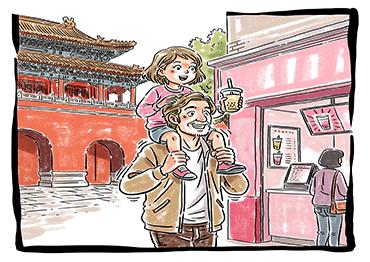
In Beijing alone, you'll find coffee shops for dog walkers, coffee shops in gyms, cafés inside retail stores, venues with views over the city's landmarks, and even one located within the Forbidden City. And that is before even turning to Shanghai, now reportedly the world's largest coffee market with over 10,000 coffee shops. It is increasingly clear that, regardless of the social circles people move in across China, coffee is likely to play a central role in their networks.
And perhaps that is the real story. Coffee in China is no longer just about the drink itself. It is about where you drink it, how it is presented and the small rituals that come with it. From tea houses in old films to the inventive cafés of today, coffee seems to be the latest expression of that creativity.
 Old Version