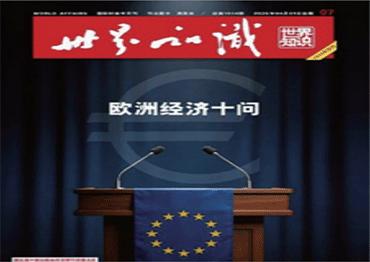
Despite the economic recovery across southern Europe, the economic landscape in the EU as a whole still shows signs of fragility with modest but uneven growth. Regardless of currency unification in the eurozone, fragmented fiscal institutions have prevented EU members from developing a unified digital platform like those in China and the US. With US antipathy, the prolonged Ukraine crisis and emerging economies' growing competitiveness, EU countries are supposed to strike a balance between high social welfare and independent defense budgets to grapple with the glut of production capacity. Once a founder and beneficiary of economic globalization, the EU today is under pressure from structural adjustment. In such circumstances, right-wing populists, who voters believe will boost domestic economies, are starting to win positions of power. Solving the Ukraine crisis will greatly help reduce energy costs and dismantle cross-border energy trade barriers for EU countries.
 Old Version