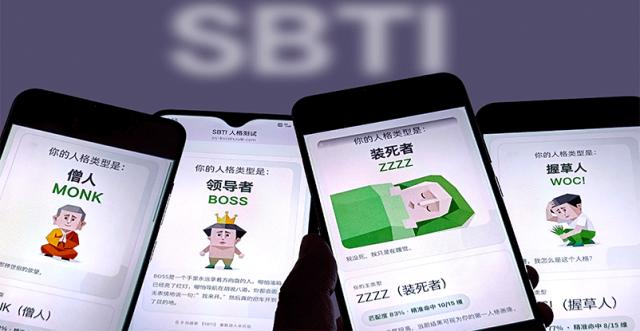
This runs counter to Chinese social media trends, where many are dismissing romantic relationships. Content creators tout common mantras like “A wise person does not fall in love” and “Only fools rush in,” calling those who do sufferers of “love brain” (lian’ai nao).
Yet beneath the cynicism, class attendance like Liu’s shows that many young people still long for love and connection, and are willing to do the homework.
“These days, everyone has emotional problems, especially under pressure,” Jia, who studies engineering physics at Tsinghua, told NewsChina. “Professor Liu’s course deals with real-life issues we all face, so it’s easy to relate to.”
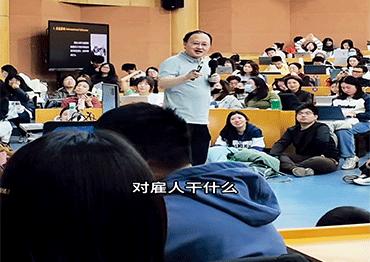
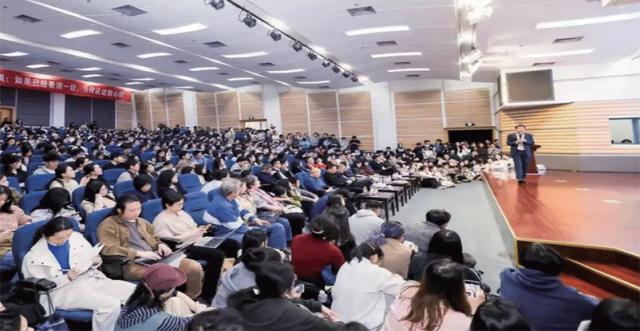
Liu’s lecture hall, designed for 220 people, often holds nearly 500. Enrollment is now decided by lottery, and dropped spots disappear within seconds. “Getting in is harder than buying concert tickets,” Jia said.
Wang Jiarui, a master’s psychology student at Tsinghua, also took the course. He said psychology is often misunderstood by the public: Some see it as motivational talk that merely repeats common sense, while others expect it to solve all their emotional problems entirely.
“Psychology mainly helps people understand their emotions,” Wang said. “It is neither a cure-all nor shallow clichés, but a set of practical tools grounded in research.”
A 2025 report on happiness in China, led by Tsinghua University professor Peng Kaiping, found that people born before the 1980s (Gen X and older) are happier than younger generations. Gen Z experiences the highest stress and lowest happiness, largely due to a decrease in social mobility.
Inspired by the study, Wang’s informal survey among his Gen Z peers revealed similar patterns. Dissatisfaction often stems from relationships and constant comparison with others, leading to feelings of inadequacy, Wang’s respondents shared.
Across China, college courses on love, intimacy and psychology have created rare spaces where students can openly discuss emotional confusion, often without judgement. They also offer both conceptual tools and emotional support for navigating relationships.
A survey by newspaper China Youth Daily in 2023 covering 1,341 college students showed that 77.7 percent were interested in courses on love and relationships. Among them, 63.9 percent wanted to improve their communication skills, and 60.9 percent wanted guidance in emotional management and empathy.
Since 2020, Lin Guanghua, an associate professor at the School of Chinese Classics at Renmin University, has taught a course that explores love through Chinese and Western philosophy and literature.
Lin draws inspiration from a similar class she took in 2007 while doing her PhD at the Chinese University of Hong Kong, where Professor Tao Kwokcheung’s “Philosophy of Love” was packed with students. The class was part of a growing global trend. In 2000, Northwestern University near Chicago, US, offered “Marriage 101: Building Loving and Lasting Relationships” by professors Bill Pinsof and Art Neilsen. It is often cited as among the first undergraduate courses on relationships, and is still taught today.
Lin, who is also the author of The Power of Love: 50 Lectures on the Philosophy of Love (2024, in Chinese only), says about one-third of students experience “cyber love,” where they form attachments to fictional characters or AI companions. She links this to a rising anxiety and distrust of real relationships, fueled by social media.
“Before even experiencing love firsthand, many are already overwhelmed by theories, warnings and fears,” Liu told NewsChina. “Online spaces are saturated with extreme relationship stories, dating scams, insincere romantic strategies and even manipulative tactics.”

 Old Version