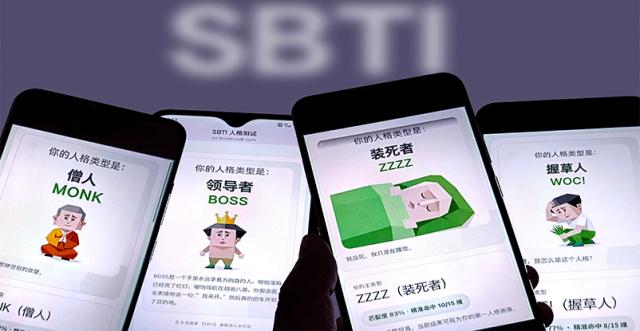
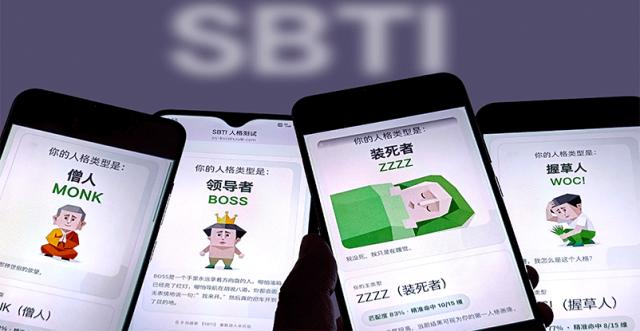
Yet, Wang Yifeng (pseudonym), 26, an avid personality test user, told NewsChina that he hesitates to share his real MBTI with colleagues and supervisors. He has even faked a result to fit his company's preferred talent profile.
"I'm a Perceiving-type. I worry the company will label people like us as ‘hard to manage,'" he said.
His concern is understandable: a handful of companies have reportedly used personality tests for hiring. "When I was looking for a job after I graduated, I heard a company rejected air signs (Gemini, Libra and Aquarius), because those people are believed to crave freedom which may be linked to a lack of self-discipline," Zhang said.
As the MBTI and similar tests spread, biases between types have emerged. Extroverts may see introverts as unsociable, while introverts view extroverts as noisy and shallow. Judging types consider Perceiving types undisciplined, while Perceivers find Judging types rigid and controlling.
Since the MBTI is often linked to career choices, types associated with rationality or leadership frequently sit atop a "hierarchy of contempt," while idealistic or nurturing types fall to the bottom.
However, interviewed experts emphasize that the scientific validity of the MBTI remains highly controversial.
Tang Jing pointed out that a professional personality test requires more than well-designed questions - it also depends heavily on norm samples, the reference groups used for comparison.
"These tests essentially tell you where you stand relative to a norm group and the definition of each type is shaped by that sample," she said. "An IQ score, for example, means nothing without comparison to a norm group. Professional tests regularly update their samples and tailor their questions to different age groups."
"But with popular online tests, we don't know what norm groups they use, whether those samples are up-to-date, or if they fit the test-takers," she added.
Huang Mengxuan, 32, a fashion designer in Shanghai, distrusts all personality tests because she finds her answers often shift based on context.
"For example, take the question ‘do you like talking at parties?' My answer depends on the party. With close friends or if it's a topic I care about, I'll chat freely. At a formal company party with strangers, I'll stay quiet," she said.
"I'm sometimes an introvert, sometimes an extrovert... my answers can even change with my mood," she said. "I don't think people can be defined by a few simple labels."
Tang told NewsChina that people evolve over time, and the same person may get different results on the same test at different ages.
"Defining someone by a few dozen questions is not rigorous. Psychological tests were originally meant to assist in identifying and diagnosing mental health issues," she said. "Expanding their use to recruitment and hiring and even using them as a decisive basis creates new unfairness."
Xiang Biao, director of the Max Planck Institute for Social Anthropology in Halle, Germany, believes that young people's craze for personality tests epitomizes their "avoidance of the nearby."
"Decades ago, people formed relationships naturally, without labeling themselves or anyone else through rigid personality frameworks," he said. "Labeling follows an avoidant logic: people sort others into fixed categories, connect only with like-minded peers and exclude difference. It brings online filtering into offline life, evading real-world complexity and diversity," he told NewsChina.
Psychologist Zhang Li in an interview with the Lanzhou Evening News in May warned young people that excessive identification with labels can lead to a self-fulfilling prophecy, harming self-development and social interaction. When people form closed circles around shared types, they may reject or even clash with those outside their groups.
A 2024 research paper about the MBTI craze by You Zhichun from the School of Marxism, Zhejiang University and Zhao Yueying of the Graduate School of Education, Peking University, published on psychology website psy.china.com. cn warned that over-dependence on personality tests would push young people to subconsciously frame themselves based on labels which would obstruct their growth. Meanwhile, stereotyped and biased images about other people would prevent them from making social connections.
"If someone firmly labels themselves as introverted, they may avoid socializing instead of trying to step out of their comfort zone," Zhang said. "These personality tests actually ignore the continuity and plasticity of personality development."
 Old Version