ore young Chinese are living in social alienation. Feeling estranged from neighbors, colleagues and family, they instead choose to immerse themselves in virtual worlds, seeking belonging on social media and online communities. Many turn to horoscopes and pseudoscientific personality tests such as the Myers-Briggs Type Indicator (MBTI), and even the Silly Big Type Indicator (SBTI), a viral parody of the MBTI.
These trends are reflected in the "disappearance of the nearby," an idea proposed by Xiang Biao, director of the Max Planck Institute for Social Anthropology in Halle, Germany.
He argues that many young Chinese have gradually lost connections to their immediate environments. Instead of understanding the world through direct experience, they increasingly rely on abstract concepts and frameworks to interpret reality. In this interview, Xiang explains why rebuilding the "nearby" in everyday life is important for young people and how they can start better creating real-life connections.
NewsChina: What is the "disappearance of the nearby" and what is causing it?
Xiang Biao: I coined the concept simply to describe ongoing social change in China. Fast urbanization has created a high-rise, vertical urban landscape: residents live stacked apart, with little horizontal neighborhood ties, encountering one another mostly in silent elevators.
A distinct Chinese pattern lies in school relocation. Many middle schools have moved to the suburbs, while most senior high schools operate full boarding. Rural school consolidation since around 2000 has shut down countless village primary schools. Early boarding institutionalizes children's daily lives, leaving them confined to formal settings and deprived of family-rooted neighborhood bonds.
Rapid digitalization, e-commerce and expanding supply chains have further reshaped everyday life. Nearly all daily needs are met via smartphones, eliminating trips to local markets and allowing comfortable living with minimal in-person interaction.
Shifts in housing, lifestyle, work and consumption together form the collective experience I call the "disappearance of the nearby." What makes this concept interesting is that it can explain why these phenomena produce so many reactions. It connects big structural and systemic changes to things people can directly feel in their everyday experience.
People acknowledge macro social trends yet rarely sense their daily impact. Modern life brings convenience but leaves many adrift, empty and unsettled, a feeling the term perfectly captures. Fundamentally, it describes how ordinary people physically experience major structural shifts in routine daily life.
Its influence has far exceeded my expectations. Chinese people, especially young generations, crave rebuilding personal life order, a sentiment heightened by the Covid-19 pandemic. Lockdowns limited mobility, pushing people to engage more closely with their immediate surroundings. Beneath this lay a loss of control over daily routines and bewilderment at disorienting social events, fueling a desire to regain life agency through close, local observation. The "nearby" provided a fitting framework for this emotional need.
This yearning persists today, compounded by economic slowdown, youth employment pressure and anxiety amid technological disruption, especially AI-related uncertainty. Many seek to understand and regain control of life within individual limits, driving the concept's popularity.
I originally devised the term merely to depict societal transformation, not to foresee this deep human longing for reconnection.
This yearning carries positive implications. China's economy is at a structural reform turning point, which must align with people's life perceptions and priorities. Material prosperity cannot satisfy spiritual and emotional needs, and mental health strains are growing. Social renewal is therefore necessary, and young people's readiness for such change marks a notably positive development.
NC: What is your take on virtual connections replacing real ones, and their hidden costs?
XB: Today's key societal concern lies in shrinking social bonds and deepening self-estrangement. Even in shared youth housing, residents live in close proximity with common amenities yet keep deliberate distance. They view relationships as emotionally taxing and unsafe, not due to physical risk or crime, but from constant fear of mutual privacy breaches.
Though often framed as defensive, this wariness reflects a fading natural social aptitude, one that cannot be taught through formal instruction alone.
Older generations used to enjoy relaxed, anxiety-free neighborly interaction as an innate social habit, a capacity now stifled in young people. Raised as only children amid intense academic pressure and early digital immersion, today's youth lack informal chances to navigate interpersonal conflict,lessons once gained naturally through childhood play. Highly educated yet deprived of these formative experiences, they have grown far more emotionally sensitive.
Their social withdrawal is not mere selfish individualism. Many hold themselves to strict personal ethics and practice frequent self-reflection yet tend to judge others inwardly without translating that reflection into real-life action or learning to cope with uncertainty. Instead, they retreat into isolated overthinking.
This avoidance of real engagement, paired with excessive introspection, leaves them as hypersensitive and emotionally volatile. This strains parent-child ties in particular. Prone to emotional reactivity, they have few opportunities for genuine family connection, having been raised to prioritize academic studies over domestic life.
A telling example: Families often hide the death of grandparents or other relatives until after a child's college entrance exam, fearing disruption to their studies. Many young people thus miss the chance to pay their final respects, a pattern widely observed in interviews.
Such losses are vital opportunities to deepen family bonds. Witnessing reserved parents openly grieve reshapes young people's understanding of their caregivers, while parental comfort reveals rarely seen vulnerability and warmth. Even quiet family tensions, though uncomfortable, expose youth to the full complexity of human relationships, grounding family life in authenticity.
When these pivotal moments are hidden, unprocessed grief often curdles into resentment toward parents. Opportunities for closeness turn into alienation, reflecting a stark deficit in cross-generational shared experience.
Genuine generational storytelling is also in decline. Chinese parents often recount their past as moral lectures, stressing hardship to push children toward effort, rather than candidly sharing their own youthful confusion, missteps and insights. Unscripted, heartfelt sharing would strengthen emotional bonds and pass down life wisdom, yet such conversations have grown rare.
Ultimately, this feeds young people's reliance on abstract rules and heightened emotional sensitivity. Fewer shared lived experiences leaves them emotionally detached with rigid personal boundaries. Though morally principled and duty-minded, they fall into cycles of overthinking. When hardship arises, mutual blame and resentment take root, fraying relationships deeply. All these trends trace back to a fundamental lack of shared life experience.
The online and offline worlds are now intertwined. Even so, many young people favor only the virtual one, dismissing offline neighborhood bonds as draining, meaningless and unrewarding. They see online communities as rich, flexible and low-commitment, which is easy to join and leave at will.
I fundamentally disagree with this mindset. A core feature of real-life proximity is its unavoidability: difficult neighbors cannot be escaped. People must learn to coexist, reconcile differences, manage friction and tolerate unease.
Online discussion cannot resolve real struggles with family, work, study or relationships. Constant exposure to endless online opinions only makes young people more sensitive, judgmental and emotionally reactive. Only offline interactions, even with difficult personalities, cultivate practical skills for navigating reality.
Furthermore, purely online spaces can never create a genuine "nearby." The internet allows people to self-segregate into echo chambers, where everyone presents only a partial version of themselves. This excludes diverse viewpoints and the full complexity of others' life stories.
Young people increasingly reduce real individuals to curated online personas, ignoring how personal history and context shape behavior. The same person may act very differently in offline settings.
Online and offline life inevitably overlap, yet relying solely on virtual connection leads to a narrow, one-dimensional understanding of the world.
NC: Why is reconnecting with local, everyday surroundings vital to easing inner turmoil and feelings of powerlessness?
XB: Much of the powerlessness felt by youth arises from viewing life in overly abstract terms, turning small setbacks into defining crises. Whereas past generations faced adulthood with optimism, many young people now fear societal pressures and being worn down by reality.
Cut off from tangible relationships and everyday life, they understand the world only through online and textbook stereotypes. Rebuilding the "nearby" cannot solve practical struggles like job hunting, but it can foster concrete, grounded perceptions. It requires curiosity, genuine engagement and learning about neighbors' life experiences and local stories.
One does not need to conduct formal social research. Simply observing how communities function is enough: outsourced sanitation work, cleaners' incomes, labor contracts, social security and the rural backgrounds of many workers. Understanding these tangible realities helps build a more nuanced view of society. When hardship strikes, people can better understand its specific context instead of seeing setbacks as total failure or personal isolation. This avoids thinking things cannot be changed and creates space for compromise and alternative paths.
Society is shaped by everyday human interactions and institutional structures. Understanding this concrete reality may not eliminate frustration entirely, but it can redirect vague dissatisfaction toward specific and actionable concerns, transforming aimless anger into meaningful motivation.
Without this grounded perspective, many young people feel adrift and become fixated on dramatic upward mobility, chasing wealth and status to escape ordinary life. This breeds cynicism and cutthroat competition, framing the world as uniformly bleak and advancement as the only escape. Yet social mobility is becoming increasingly difficult, and sacrificing everyday happiness and genuine relationships for status rarely brings lasting fulfillment.
In the end, reconnecting with the "nearby" eases feelings of powerlessness by anchoring people in lived and tangible reality.
NC: How can young people cultivate a sense of "the nearby" in daily life?
XB: I have explored this issue for years. Ordinary residential and resettlement communities already possess a natural sense of "the nearby." A typical example is my parents' neighborhood on the outskirts of Wenzhou (Zhejiang Province), built on expropriated rural land. Half of the residents are relocated local villagers who still maintain close traditional rural ties, while the other half are newcomers from across the country. Even with this mix, neighborhood bonds remain strong.
Residents voluntarily organize square dancing and activities for seniors, led by dedicated local volunteers who even buy audio equipment with their own money. This is a natural expression of community care.
Community building first emerged in well-resourced upscale neighborhoods and was often dismissed as merely a middle-class pastime. Yet these grassroots efforts are genuine and offer lessons that can be applied more broadly.
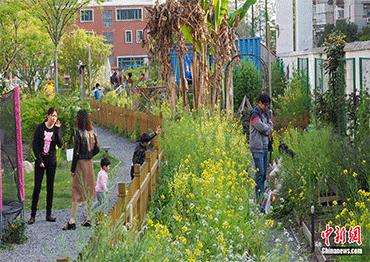
Although residents in luxury housing are mostly strangers, such communities often provide abundant shared resources: libraries, informal reading groups and youth-organized outings. The Urban Community Garden project [in Shanghai] led by Liu Yuelai, (an associate professor of landscape architecture at the city’s Tongji University), reflects this spirit by transforming neglected and poorly greened urban spaces into shared public areas through resident-led tree and flower planting.
This modest initiative involves complex coordination: allocating land, selecting plants, setting rules against picking flowers and arranging regular watering schedules. Flower beds naturally spark conversations, encouraging neighbors to share personal difficulties and family concerns while gradually strengthening community ties.
There is no universal model for rebuilding "the nearby" because it must adapt to different environments.
Greater attention should also be given to the workplace. Residential bonds are valuable and relatively easier to cultivate because they are supported by community committees and active older residents.
For many young people, however, the workplace is deeply alienating: high pressure, fragmented colleague relationships, long working hours and constant overtime further isolate individuals.
In some companies, coworkers know only each other's employee numbers rather than their names, making genuine emotional communication difficult. Combined with performance-ranking systems, this keeps employees anxious and guarded.
Young people should actively create healthier workplace relationships. Traditional top-down corporate team-building activities have limited value. Instead, workplaces need more spontaneous and bottom-up interaction, allowing colleagues to engage as complete human beings rather than merely professional roles. Although difficult, this requires conscious creativity and sustained effort.
NC: Are there successful examples of reviving "the nearby" that can be replicated?
XB: Pioneering efforts such as Shanghai's community gardens have already been successfully replicated in cities including Urumqi, Xinjiang Uygur Autonomous Region. Young people are highly enthusiastic about relaxing and noncontroversial activities such as flower planting. Simple design choices, including selecting flower varieties and naming garden plots, encourage everyday interaction and transform neglected spaces into lively communal areas.
One notable example is Wenzhou's Slow Life, a long-running community salon and social experiment launched in 2017 (now run by a local private culture and media company). It is known for hosting free weekly dinners, creating a welcoming gathering space close to people's homes and workplaces. Each weekend, six strangers share a meal and engage in open conversation.
Over nearly a decade, 10 couples have met and married through the program, while about 90 percent of participants never reconnect after a single meal. Organizers consider this entirely normal: relationships within "the nearby" do not need to become intimate or lifelong.
People should accept that they will encounter others with whom they do not connect, without forcing closeness or trying to change each other's views. The important thing is recognizing and engaging with others as genuine and distinct individuals. Some participants may find partners through such events, while most simply enjoy a sincere conversation before going their separate ways, reflecting the natural dynamics of urban communities.
The real value of Slow Life lies less in its low-cost and inclusive approach, which lowers barriers to emotional openness. It also includes structured icebreaking activities. Participants are blindfolded and silently guided through the street by another stranger, without speaking. This creates immediate and intuitive trust without excessive overthinking, echoing the interpersonal bonds found in traditional villages. People naturally accept those around them and trust that neighbors are unlikely to cause harm or deception.
NC: Must young people rebuild the "nearby" by reshaping their mindsets and habits? Are there gentler alternatives?
XB: A gradual and gentle approach is essential. Treating the rebuilding of "the nearby" as a form of radical self-denial or harsh self-criticism is unsustainable.
Many young people live within stable and protective routines. Although their lives may appear balanced, they often feel unfulfilled and sense that something is missing. This protection can trap people within their comfort zones. They avoid excitement and hope because they fear future disappointment, which lowers their quality of life and cuts them off from anticipation and enthusiasm.
Change should therefore happen gradually. Instead of pursuing only positive experiences, it is better to begin by accepting small disappointments and ordinary imperfections.
Young people can observe this from their elderly neighbors. Their lives contain frustrations and sorrows, yet they often display quiet contentment and natural self-acceptance, peacefully reconciling themselves with past hardships. Watching unresolved tensions within the community can also help younger people understand that disappointment is a normal part of life. The key is to learn from setbacks and continue moving forward.
This gentler approach avoids the pressure created by unrealistic positive ideals, which often lead to disappointment. Engaging calmly with life's small flaws and quiet frustrations can steadily and sustainably build inner resilience.
 Old Version