Old Version
Economy

Delicate Operations

Hospitals are seeking to turn their terabytes of medical records into tradable data assets, raising new questions about patient privacy and consent

By Xie Ying , Hu Kexin Updated Aug.1

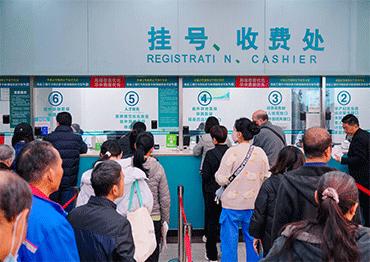
People line up at registration and feecollection counters in Huizhou FirstHospital, which has established a commercial insurance service centerto promote simultaneous settlement,data security, privacy protection and risk management, Huizhou, Guangdong Province, January 2026(Photo by VCG)

Beijing Tongren Hospital completed a first-of-its-kind deal with German pharma firm Bayer Group and Jiangsu Hengrui Pharmaceuticals on April 21, involving a large collection of eye health records for an undisclosed amount. 

Bayer said the database, which covers 100,000 people and contains 30 million entries with common ophthalmic conditions such as keratopathy, dry eye syndrome and myopia, will go to product development and AI model training. 

Three months earlier, a county-level hospital in Fujian Province sold datasets from its neurology, cardiology and geriatrics departments through the Beijing International Data Exchange for more than 450,000 yuan (US$62,500). 

As technologies like AI drive demand for high-quality medical data, hospitals and businesses are increasingly seeking to tap its commercial value. This trend is backed by government policy, including the Three-Year Action Plan on "Data Element X" (2024-2026) released in 2023, which identifies healthcare as one of 12 key sectors for data utilization. 

Yet the medical data market is raising hard questions about privacy, consent and governance. How these issues are addressed will determine whether medical data becomes a public resource or a new source of risk.

Quantity and Quality
Demand for such data has long existed among drug R&D firms and insurance companies. Zhao Heng, founder of healthcare consulting firm Latitude Health, told NewsChina that previously, many companies obtained data through hospital partnerships, including joint research projects, and commercial transactions have since made access to data easier and more affordable. 

At the May 29 launch of the Three- Year Action Plan, China's National Data Administration revealed that the national medical insurance information platform had accumulated 2.73 trillion records. The platform covers 1.33 billion insured individuals and more than one million medical institutions, with over 100 million new records added daily. 

Despite this abundance, much of China's medical data remains underutilized. Often the bottleneck is quality, according to Xing Lumin, director of the Shandong Data Open Innovation Application Laboratory. 

"Many hospitals still struggle with fragmented systems, inconsistent standards, missing fields and record errors," Xing, who is also a data engineer at the First Hospital Affiliated With Shandong First Medical University, told NewsChina. 

Roughly 70 percent of existing medical data is "unstructured" in this way, according to Zhu Tongyu, deputy dean of Shanghai Medical College at Fudan University. 

Zhu said that while informal data like doctor-patient conversation records can be useful for routine care, they lack the quantifiable information needed to train AI properly. "For example, an AI system may interpret ordinary abdominal pain as a severe condition. One major cause of such AI hallucinations is the lack of high-quality structured medical data," he said. 

Therefore, medical data requires processing. Xing's team began this work in 2023, developing broader datasets covering common diseases, and specialized ones like a liver disease dataset his hospital recently sold for 30,000 yuan (US$4,200). 

But this can be both technically challenging and costly. 

"Many hospitals have upgraded or completely replaced their systems multiple times, resulting in significant data loss," Zhu said. "Moreover, past record-keeping practices often did not require real-name registration, leaving many long-term datasets inconsistent or incomplete." 

As a result, professional data-processing services have emerged. Xi'an Well-care Medical Information in Shaanxi Province has processed data for several local hospitals. "Our work includes classifying records by department, coding diagnoses according to international medical standards, and organizing imaging data such as MRIs and pathology slides," Wang Aiping, vice president of parent company Xi'an International Medical Investment, told NewsChina. 

According to various media reports, there are around 50 to 100 companies in China specializing in sorting and structuring raw medical data.

Privacy and Security
In January 2025, Beijing International Data Exchange announced its platform had reached nearly 10 billion yuan (US$1.4b) in transactions, with healthcare among the most active sectors for data trading. A year earlier, Shanghai Data Exchange projected that China's data transaction market will expand to approximately 715.9 billion yuan (US$99.4b) by 2030. 

Yet as hospitals and enterprises seek to unlock this value, public concerns over personal information continue to grow. Many question whether hospitals can sell medical data without patients' explicit consent. 

Under a trial policy issued in December 2025, medical data holders must process raw data to protect individuals from being identified. Approved methods include guaranteeing anonymity, retaining only essential fields and generalizing any sensitive attributes. 

Legally, personal information loses its status once sufficiently redacted. This is among the reasons why medical data must be desensitized before being traded. According to media reports, the data in deals mentioned so far had been scrubbed of personal information. 

However, as no unified standard exists, privacy protection remains a major issue in medical data deals, particularly when datasets contain information related to specific regions, age groups or medical conditions that could be traced back to specific individuals. 

Deng Yong, a professor at Beijing University of Chinese Medicine, told NewsChina that hospitals often mistakenly assume the standard consent forms patients sign during routine treatment are enough to authorize commercial use of their data. 

"Under China's Personal Information Protection Law, hospitals must inform patients of the true, accurate and complete purposes for collecting and using their information, as well as how it will be used," said Huang Qirui, a lawyer at Beijing Hongsa Law Firm. "Hospitals should revise consent forms or explicitly disclose potential commercial uses through other transparent channels." 

Since data trading remains an emerging practice, China does not yet have a standardized framework for informing patients about commercial use of medical data. 

Experts have also long debated its ownership. "The holders of medical data are highly fragmented, involving individuals, hospitals, enterprises and even local governments," He Bin, a special researcher at the Research Center for Public Policy at the Chinese Academy of Social Sciences (CASS), told newspaper Nanfang Daily in 2024. "The same patient's data may be held, maintained and updated by multiple entities, making complete traceability to the original source virtually impossible." 

"To some extent, we must set aside ownership disputes and allow legally compliant data transactions to advance the development of medical data," said Li Yixue, a professor at Guangzhou Laboratory, a government-backed respiratory disease research institution. "If we focus excessively on ownership issues, we will be unable to move this initiative forward." 

In December 2022, the central government issued a policy document on establishing systems to better leverage data. The document proposed exploring a hierarchical ownership framework under which different forms of data use would be subject to different levels of management and supervision. It is widely viewed as a blueprint for reconciling data circulation with security and oversight.

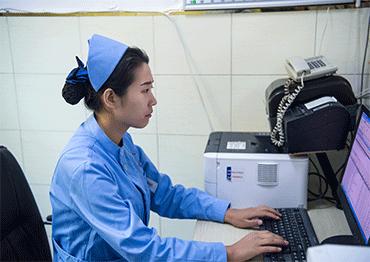
A medical worker processes medical records, Wanrong County, Yuncheng, Shanxi Province, October 24, 2018 (Photo by VCG)

Balancing Interests
Additional measures have been introduced to mitigate privacy and security risks. 

One solution is Trusted Data Space (TDS), a secure framework promoted by the National Data Administration. TDS enables medical data to be used for research, AI training and drug development while keeping raw data inaccessible to outside parties. In essence, data is processed within a secure environment and only analytical results are released. 

Supported by the Trusted Data Space Development Action Plan (2024-2028), China has launched 63 national TDS pilot projects, a number expected to increase to 100 by 2028. 

Guangzhou Municipal Health Commission in Guangdong Province told NewsChina that more than 40 hospitals have joined its local TDS since launching in 2024, and millions of medical records have been processed through the platform. 

Among the first was the Women and Children's Hospital under the Third Affiliated Hospital of Guangzhou Medical University. 

"At the time, a manufacturer of neonatal jaundice detectors sought to improve its products," said Li Mengjun with Guangzhou Digital Health Technology, which jointly built the local TDS with the Guangzhou government and helped process the hospital's data for it. "Rather than restricting access entirely, the platform transfers hospital data into a secure environment, enabling what we call ‘accessible but invisible' data utilization," Li said. 

Although TDS platforms are not legally required for all medical data transactions nationwide, they have become the preferred mechanism for public hospitals and research institutions to reduce privacy risks. 

Another approach is to conduct transactions through government-backed exchanges such as Beijing International Data Exchange and Shanghai Data Exchange. Compared with fully private platforms, which are a very small minority, government-operated or government-backed exchanges generally impose stricter qualification reviews and stronger security safeguards. Official data shows that approximately 20 to 25 government-backed data exchanges are registered with China's National Health Commission. 

"Before listing medical data products, we verify the qualifications of data holders and the provenance of datasets to ensure collection and use comply with relevant laws and regulations," Zhou Yuan, marketing director of the provincial-level Guizhou Data Exchange, told NewsChina. 
According to Zhou, the exchange certifies qualified data products to enhance trust and credibility. 

"These certifications function much like property deeds, providing official recognition for data transactions. Once all documentation is complete, certificates can generally be issued within two to three working days," Zhou said. 

Beyond security oversight, exchanges also help with pricing. Guizhou Data Exchange has launched China's first data transaction pricing calculator, which provides recommended price ranges based on collection costs, data scarcity and quality. 

To further promote medical data circulation, Zhu Tongyu, who is also a member of the Chinese People's Political Consultative Conference (CPPCC), proposed a new data ecosystem model during the 2026 two sessions aimed at balancing interests. 

The model incorporates technologies such as TDS to prevent misuse and improve transparency. It also includes compliance and benefit-sharing mechanisms designed to ensure individuals receive tangible value from their contributions. For example, patients may gain easier access to AI-powered healthcare services or their long-term medical records across institutions. 

"Patients are the source of medical data and should benefit from the value it generates," Zhu said. "We cannot realize the value of medical data at the expense of security, nor should we stifle innovation because of potential risks."

Print