Zhu Guangxing, associate professor of criminal law at China University of Political Science and Law:“Data like this isn’t helpful, to be honest. Offenders rarely commit crimes repeatedly in the same place, often moving on to new residential areas. Most sexual assaults occur in private enclosed spaces, so this data doesn’t effectively reflect the safety status of public areas.” Source: China Newsweek
Li Ying, lawyer at Beijing Yuanzhong Family and Community Development Service Center:“This mini program faces major legal risks for distributing victims’ names, home addresses and other information legally entitled to protection.” Source: China Newsweek
Wang Haiding, deputy captain of the Nanjing Public Security Bureau Jiangning Branch cybersecurity brigade in Jiangsu Province:“I have always harbored a deep abhorrence for crimes such as child molestation and rape. But we live in a modern society governed by the rule of law. Even such criminals do, in fact, have human rights. Even if criminals convicted of such crimes may be subject to electronic ankle monitoring, like they are in South Korea, ordinary citizens still cannot access their real-time location data.” Source: Sina Weibo
A privately developed mini-app that functioned as an unofficial child sex offender registry sparked outcry in China for publishing the names and addresses of victims.
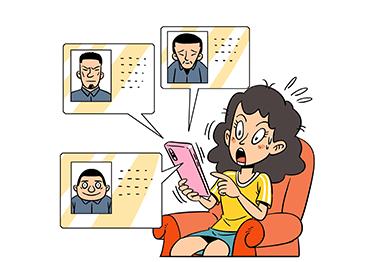
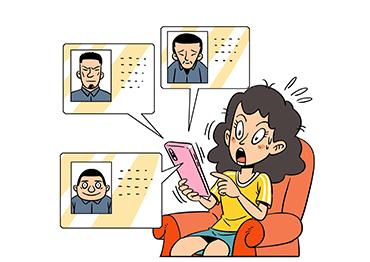
The WeChat mini-app, Child Sexual Harm Early Warning, referenced court records to show users the number of people convicted for sexual offenses against minors within a 50-kilometer radius of their location.
"There are 304 individuals with prior convictions for child sexual offenses living near you," Fan Yiyi, a young mother from Hebei Province, received in a screenshot shared in a parents' WeChat group, China Newsweek reported.
According to business inquiry platform Tianyancha, the mini-app is operated by Beijing Alliance Public Welfare Development Center, a registered non-profit that works with charity and social institutions.
The mini-app allowed users to access records that include offenders' full names, addresses, criminal charges and "risk level," as well as offering a 19.9 yuan (US$2.9) per month subscription tier with real-time alerts and more detailed profiles of convicted offenders.
According to reports, the Center voluntarily removed these functions following user complaints over the explicit case details they revealed, along with victims' full names and crime scene locations, which were sometimes their own homes.
Users also discovered that the number of convicted sex offenders shown referred only to their registered addresses or the locations of crimes listed in court verdicts, rather than their actual current locations.
That is partly because the data it published is outdated. Launched in 2015, the app cooperated with public security authorities for access to the data through a third-party platform. But that partnership has ended "for a long time," a public security spokesperson told newspaper Modern Express in May.
While China also has an official child sex offender database, public access is strictly limited.
Most netizens were united in criticizing the mini-app over the dangers of exposing victims' information, but opinions were divided over the disclosure of offenders' information. Some support making detailed information about child sex offenders public, while others argue that convicted criminals also have privacy rights.
 Old Version