Old Version
Economy

Krunch Time

China’s high-tech industries and exports are surging, but traditional sectors and domestic demand remain weak, raising big questions over whether this K-shaped recovery reflects a temporary restructuring or a more permanent divide

By Yu Xiaodong Updated Oct.1

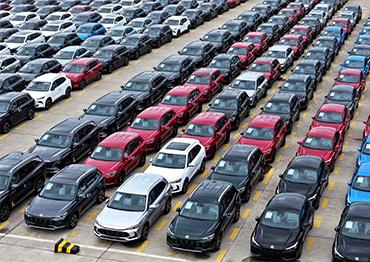
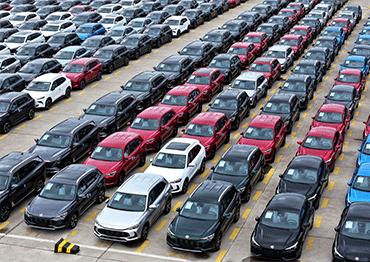
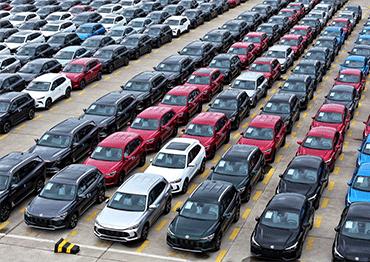
A feet of China-made cars wait for export at Lianyungang Port, Jiangsu Province, August 10, 2026 (Photo by VCG)

Despite a more challenging global environment, China's GDP expanded 4.7 percent year-on-year for the first half of 2026, keeping growth within the government's target range of 4.5 to 5 percent, according to National Bureau of Statistics (NBS). 

However, beneath the reassuring headline figures, the latest economic data points to an increasingly uneven recovery that many economists describe as a K-shaped pattern. 

Unlike a V-shaped or U-shaped recovery, where most sectors rebound together, a K-shaped one sees some parts of the economy expand while others experience sluggish growth or even decline.

Two-speed Recovery
The NBS data shows that China's growth is increasingly concentrated in a handful of technology-driven sectors Dwhile traditional industries and domestic demand continue to struggle. 

In the first half of 2026, China's hightech manufacturing grew 13.3 percent year-on-year, while equipment manufacturing and electronics manufacturing expanded by 9.3 percent and 14.8 percent respectively, well above the 5.4 percent growth in the value added of industrial enterprises above designated size (those with an annual revenue above US$3m). By comparison, some traditional industries performed far less impressively: mining grew by just 3.6 percent. 

The service sector exhibited a similar pattern. While the sector grew 5.2 percent and contributed 66.1 percent of overall economic growth, information transmission, software and IT services expanded 10.7 percent, while leasing and business services grew 11.9 percent, reflecting strong demand for producer services as industrial upgrading gathers pace. By contrast, growth in several more traditional service industries remained comparatively subdued, with transport, storage and postal services expanding only 4.7 percent. 

The divergence is even more striking on the demand side. External demand remained a major source of growth, with total foreign trade rising 16.9 percent to a record 25.47 trillion yuan (US$3.75t) in the first half of the year, with exports and imports up by 13.4 percent and 22.1 percent respectively. 

The export surge was led by high-tech products, whose exports increased by 39 percent. Integrated-circuit exports jumped 96.1 percent year-on-year, making them China's largest single export commodity for the first time in June. Exports of automatic data-processing equipment and related products, including computers and servers, rose 41.3 percent. Mechanical and electrical products grew 20.1 percent and accounted for 63.5 percent of total exports. 

As high-tech industries have surged ahead in both domestic and external markets, the benefits have accrued largely to specialized manufacturers and large equipment makers. Many traditional small and micro enterprises are trapped in cutthroat competition, with profit margins steadily eroding. This has led to weak domestic demand. Retail sales rose only 1.3 percent in the first half of the year, with per capita consumer spending increasing only 2.7 percent in real terms, slowing to 2.0 percent among urban residents. 

The prolonged property downturn continues to weigh on both investment and household confidence. Real estate development investment fell 18 percent, while the value of new commercial housing sales declined 13.6 percent. Infrastructure and manufacturing investment also fell 2.4 percent and 1.2 percent respectively. All this led to a decline of 5.7 percent in total fixed-asset investment excluding rural households, with private investment recording a deeper decline of 8.5 percent. 

Meanwhile, industrial capacity utilization fell to 73 percent in the second quarter, its lowest level since Q2 2020, reinforcing official assessments that the economy continues to face a pronounced imbalance between strong supply and weak domestic demand.

‘Short-term Growing Pains'
Economies at the forefront of the latest technological revolution have also experienced widening gaps between fast-growing technology industries and more traditional sectors. In the US, for example, AI has widened this gap over the past few years. South Korea has experienced a similar divide as booming semiconductor exports increasingly contrast with sluggish domestic demand. 

But some economists argue that China's economy differs from other major economies in significant ways. 

Speaking at the 121st China Macro-economy Forum (CMF) seminar in June 2026, Wu Ge, chief economist at Changjiang Securities, argued that while the US' K-shaped pressures stem from a series of supply-side cost shocks, China's are driven primarily by weak demand. 

In the US, while technology and AI investment have driven growth, higher energy prices, tariffs and other factors have pushed up production costs and consumer prices. In China, strong exports and growth in high-tech and emerging industries have supported the economy, but domestic demand, including consumption and investment, has failed to keep pace. 

The bigger question for economists is whether the K-shaped pattern is a transitional feature of structural adjustment or could harden into a longer-term divide. Some warn that the divergence could weigh on employment and consumer confidence, further weakening domestic demand and reinforcing the pattern. 

Others argue that China is undergoing a longer-term shift from a manufacturing-led economy toward one increasingly centered on services and advanced industries. 

"It is a misinterpretation to treat the short-term ‘temperature gap' created by structural adjustment as a permanent structural divide," said Liu Yijun, an economist from the Capital University of Economics and Business in Beijing, in an article on Beijing Daily's web portal on July 23. 

Liu argued that while China's emphasis on "new quality productive forces" has led to rapid growth of new industries and business models, these drivers have yet to reach a scale and level of maturity sufficient to fully offset the adjustment of traditional ones. "The shift from old to new growth engines is rarely a smooth handover," Liu said. 

Describing the current problems as "short-term growing pains," Liu argued that with the right policies, China's ongoing industrial transformation will be able to help raise total factor productivity and improve the quality and sustainability of growth in the long run. 

Liu's view was echoed by Liao Qun, chief economist at Hong Kong's Sino Group. In a column published on Sina. com on July 23, Liao argued that China's K-shaped recovery reflects two structural transitions taking place simultaneously. 

The first is the technological shift driven by the digital and green revolutions, which is contributing to K-shaped divergences globally. The second is China's longer-term industrial upgrading from an economy dominated by lower-end manufacturing toward one increasingly driven by services and high-end manufacturing. While this transition has largely been completed in developed economies, Liao noted, it is still unfolding in China. 

"The overlapping of these two transformations makes China's K-shaped economic divergence especially pronounced," Liao said. As both are "inevitable" trends for China's future economic development, he argued, K-shaped divergence is a "positive, forward-looking, and aggressive" form of development rather than a sign of economic failure. 

The policy challenge is to strengthen the links between the old and new. Liao called for traditional industries to be upgraded through digital and green technologies, while encouraging emerging industries to create new sources of employment and absorb workers displaced by the structural shift.

Boosting Consumption
Whether it is transitional or long term, there is consensus among economists and policymakers that the immediate impact of the divergence on growth prospects and people's livelihoods is a concern. 

On August 1, an editorial published by Qiushi, the Communist Party of China's flagship journal, framed the discussion in terms of the gap between macroeconomic data and people's lived experiences. 

While stressing the economy's resilience, it urged to "pay close attention to the difficulties and challenges facing the economy," while "remaining confident, confronting them head-on and making the most of the opportunities and advantages available." 

More specifically, it called for faster adoption of new technologies in traditional industries, better market-based resource allocation and fewer barriers to technological application, so that AI and other emerging technologies can benefit a broader range of businesses and workers. 

"The transition between old and new growth drivers is at a critical stage, making it all the more important to keep growth stable, maintain the economy within a reasonable range and use economic stability to safeguard people's livelihoods and improve their well-being through development," the editorial said. 

On July 13, the State Council, China's cabinet, approved the 15th Five- Year Plan for Expanding Consumption, which sets a 2030 retail sales target of 60 trillion yuan (US$8.85t), nearly 20 percent higher than the 2025 level. 

The plan, the first of its kind, sets out 28 key tasks across six areas, with a strong focus on boosting household spending power and expanding services consumption. It calls for more stable employment, higher minimum wages and greater household property income, while pledging to strengthen social security and increase public spending on education, healthcare and eldercare to ease household burdens. The plan seeks to raise the share of household spending on services through expanded offerings in eldercare, childcare, culture and tourism, health and sports. 

How these plans are implemented will be crucial in determining whether China's K-shaped divergence will persist.
Print