Old Version
Life

Stolen Voices

As AI clones performers without permission, Chinese dubbing artists are sounding off by filing lawsuits, taking precautions and calling for the tech’s legal and responsible use

By Qiu Guangyu Updated Aug.1

(Photo by VCG)

Chinese voice artist Lü Yanting, known for voicing the character Ne Zha in the acclaimed animated movie series, denounced AI's blatant voice infringements in a statement posted on her personal Weibo social media account on March 16. 

"All dubbed voices circulating in public embody the core abilities and unique personalities of the artists, whose distinctive vocal styles have been forged through years of hard work and dedication," she posted under the name of her studio, Sichuan Movie-Lü Yanting. 

"These voices should only be used with the authorization of their creators, as a sign of respect for their personality and intellectual property rights," the post read. 

Warning of legal action, including reporting to administrative departments, police and filing lawsuits, Lü showed her resolve to combat voice piracy. 

She is not the only voice actor to speak out. 

Others such as Ji Guanlin, who dubbed Zhen Huan, the lead in TV series Empresses in the Palace, and Zhang Jiaming, who voiced Celestial Taiyi in Ne Zha 2 published similar posts on Weibo at the same time, criticizing AI voice piracy. 

Voice artists at Beijing's renowned 729 Voice Studio collectively vowed to hold infringers accountable, The Beijing News reported in March. 

China's Civil Code protects personality rights, including portrait rights, which cover an individual's voice. The law states that voices may not be synthesized, used or disclosed without authorization. 

Despite the first AI voice infringement verdict in 2024, AI tools have continued to replicate a wide range of celebrity voices to dub training materials or produce content without authorization. 

Feng Junhua, a veteran voice actor and co-founder of Shanghai Voice Bear Studio, told NewsChina that AI's ease of imitation undermines actors' professional values. 

"This could be fatal to voice artists whose careers rely on the uniqueness of their voices," she said. 

According to a white paper on IP adjudication released by the People's Court in Haidian District, Beijing, dubbing platforms found liable for infringement in TV dramas were listed among 10 typical cases concerning cyberspace governance. 

In a statement in early April, industry body the Actors Committee of the China Federation of Radio and Television Associations said that AI misuse, including face-swapping, voice cloning and unauthorized use of actors' images and audio have seriously infringed on performers' rights and disrupted the entire industry.

Background Noise
Discussions on illegal AI voice collection, training and cloning have heated up this year, with infringement cases surging across various audio and video platforms, Gao Yixue, a leading dubber at a Beijing studio owned by Jingyun Kaige Cultural Communication, told NewsChina. 

"AI has become a ticking time bomb, though we don't know when it'll explode," she said. 

In March, highprofile news anchor Bai Yansong criticized AI infringements on China Central Television's (CCTV) program News Weekly, saying that both dubbing artists and journalists like him have fallen victim to AI fraud. 

"There are so many videos using my voice without my knowledge," he said. 

Last year, a vlogger cloned the voices of Chinese Olympic champions, including diver Quan Hongchan and table tennis players Sun Yingsha and Wang Chuqin, to sell eggs on a short-video platform. One video using Quan's cloned voice received 11,000 likes and raked in 47,000 orders. In April 2025, Quan's family confirmed she had not endorsed the eggs. 

The prevalence of illegal voice cloning has soared since 2024. On some marketplace platforms, dubbing training programs with AI voices sell for as little as 10 yuan (US$1.45). 

The rapid rise of short videos and web dramas has caused huge demand for voice actors. Producers use AI voice synthesizers to accelerate audio creation to get the exact tone and pitch they want. 

AI's ability to blend different timbres into a single voice makes infringement very difficult to detect. 

Some voice artists speaking anonymously said this new wave of AI-led voice piracy has become such a huge problem that apart from being hard to detect, providing solid evidence for legal action is almost impossible.

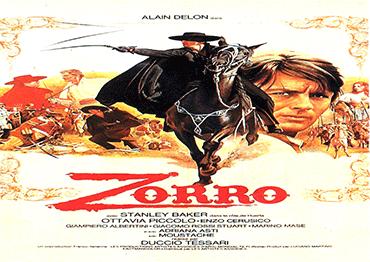
A poster for Zorro (1975)

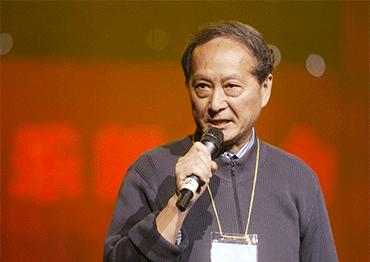
Tong Zirong, voice actor for the Chinese dub of Zorro

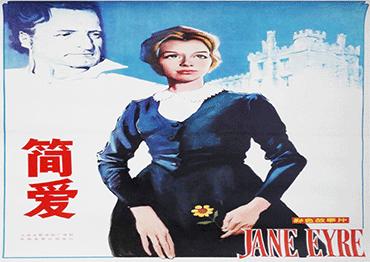
A poster for Jane Eyre (1970)

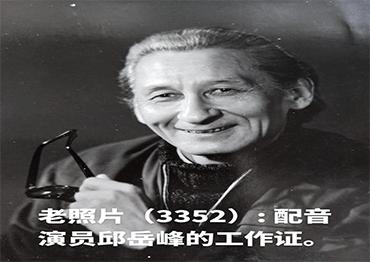
Qiu Yuefeng, voice actor for Mr Rochester in Jane Eyre (1970)

Costly Accusations
China ruled on its first AI voice infringement case in April 2024. At that time, the Beijing Internet Court, having covered first-instance internet-specific cases since 2018, gave a verdict on the country's first lawsuit in June 2023. 

The court ordered two of the five defendants - a smart tech company and a software producer, to apologize to a voice artist surnamed Yin. The defendants had to remove all relevant voice content from their products and compensate Yin 250,000 yuan (US$3,645). 

During their defense, the software company argued that Yin's voice was unrecognizable because it had been altered by AI, according to the judgement published on August 4, 2025, by nonprofit site Intellectual Property Lawyers Network based in Beijing. 

However, according to the court, the AI-generated voice remained consistent with Yin's timbre, tone and pronunciation, and listeners were able to discern this. 

"Although the plaintiff eventually defended her rights, her time and energy taken up by the lawsuit were immeasurably high," the CCTV program Frontline said in March. 

Since that case, more voice artists have opted to defend their rights in court, even though proving voice cloning is hard. 

Feng of Voice Bear studio sued an AI voice training software developer in 2024 for unauthorized 
use of three of his studio's actors cloned from a video game. 

The developer settled six months later, agreeing to apologize online and compensate the artists after removing their voices from their platform. 

According to Voice Bear's lawyers, voice identification involves three major approaches: technological identification, court inspection and public recognition. But AI synthesizers can alter vocal tones, making this increasingly challenging. 

To provide effective evidence, the three artists re-recorded the same content to show how their voices had been infringed. But this took considerable time, money and effort, leaving the studio few options but to reach a quick settlement. 

"The rapid advances in AI are bound to increase voice infringements and disputes," Xu Xinming, senior partner and IP director at Beijing Times Law Firm, told NewsChina. 

However, to win in court, a voice's fame factor can be decisive. Zhang Xiaomei, partner at Guangdong Zhi Heng Law Firm, said that the more prominent a voice is, the stronger the legal protection it can receive, because the law only protects voices which are identifiable and recognizable among the public.

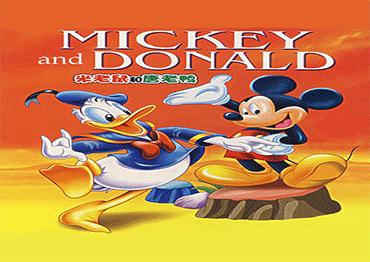
A poster for Mickey and Donald (1986)

Li Yang, the voice actor for Donald

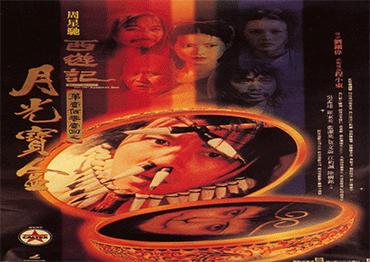
A poster for A Chinese Odyssey (1995)

Shi Banyu, voice actor for the character Sun Wukong (starring Stephen Chow) in A Chinese Odyssey (1995) (Photo by VCG)

Sound Justice
Facing these complexities, dubbing studios have started to take preventive measures. 

"All our voice artists have received nationally accredited timestamp certificates through the Judicial Confirmation of Voice Personality Rights process, forming a complete and traceable chain of evidence protected by the Civil Code and relevant laws," dubbing studio Jingyun Kaige in Beijing announced on social media on March 18. 

Studios can register trusted timestamps and voiceprint authentication with third-party certification websites, as well as upload audio recordings to mark their uniqueness, Gao told NewsChina. This constitutes a preventive measure against potential voice infringement. 

Even as they raise their voices against AI theft, many artists do not intend to boycott these new technologies. On the contrary, they are willing to use AI to improve work efficiency and authorize the contracted use of their voices by platforms and training institutes. 

"We've always been upbeat about the development of AI technology, which can open up tremendous potential and room for artistic creation," the statement from Lü Yanting's studio said. 

"We believe the healthy and orderly development of new technological innovations can lead to positive growth for both creators and the dubbing industry," the studio said.

Print