• Behind all the online ridicule is a touching story about a mother and son who spent five years doing the animation all by themselves. Persistence deserves recognition.
• Look beyond the rough appearance, and it's a peaceful and warm story about growth, friendship and maternal love. It's made for little kids.
• It has started worthy discussions about what standards we should use to judge low-budget indie films. Should effort mean more than finished quality?
Source: Sina Weibo
Cui Jingxuan, film director: "The breakout success of Niu Lai has made earnest, hardworking filmmakers feel as if we are clowns. The works we created, out of professionalism and the efforts of dozens, even hundreds of people, only receive mockery and disapproval from audiences. It is, frankly speaking, deeply damaging to the self-esteem of professional filmmakers."
Source: Entertainment Capital
Teng Jingshu, film critic: "The title is Niu Lai (Here Comes the Cow), but what we saw is ‘Here Comes the Trash.' If such a 100-percent trash film can gain any revenue, it would harm the film industry."
Source: Sina Weibo
Lin Zhike, film critic: "For audiences, such an extremely ‘shoddy film' is actually a fun cult movie. We cannot use traditional cinema aesthetics to evaluate cult movies. Cult movies are never within the sphere of mainstream pop culture, but rather a niche subculture. Therefore, it is pointless to place Niu Lai within the conventional film evaluation system."
Source: WeChat Official Account
Released this summer, a low-budget Chinese animated film made by a mother and son became an unlikely box-office success and pop culture phenomenon.
Niu Lai, literally "Here Comes the Cow," was released on August 5 by director Xin Yumeng and his mother, Sun Lifang. Made over five years entirely on a home computer and without a professional crew or capital investment, the film earned just 7,168 yuan (US$1,070) in its first nine days.
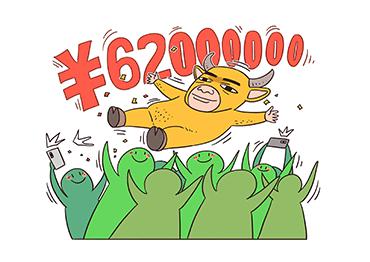
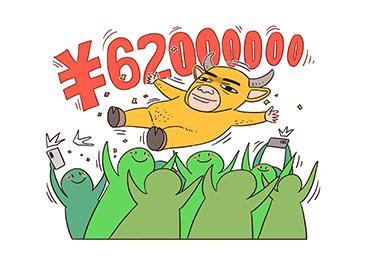
Then social media caught hold of it. Memes, fan-made content and sheer curiosity led the film to rake in over 62 million yuan (US$9.3m) by September 10, making it one of the greatest returns on investment in Chinese cinema history.
But the success also sparked heated debate over the film's artistic standards and the unpredictability of cultural consumption in the digital age.
Niu Lai initially received overwhelmingly negative reviews. Critics and viewers complained about its rough production and hollow plot. Its animation quality was singled out most, with figures sliding across the screen and rigidly rotating as if being dragged by a mouse cursor.
But that look became the film's biggest selling point. As word spread online, audiences filled seats for the novelty of seeing what some dubbed "the worst animation ever." The wave of attention sent the film's box office soaring nearly a thousandfold.
The phenomenon has drawn criticism from the media and industry insiders. Some have accused cinemas of sacrificing industry standards for traffic and profit, arguing that increasing screenings for substandard works damages audience trust and disrupts the healthy development of the film market.
Some commentators described Niu Lai's success as a product of the absurdist and surreal humor popular in online subcultures, warning that if poor-quality productions can make money simply by generating enough online buzz, filmmakers could have an incentive to rely on gimmicks and controversy rather than invest in better production and storytelling.
However, many netizens argued that Xin and Sun deserve support for completing the film on their own over five years. For them, work by indie creators should be more supported and tolerated.
 Old Version