Old Version
Cover Story

Hitting the Gas

With abundant renewable power and growing policy support, China is laying the groundwork for green hydrogen to play a larger role in industrial decarbonization

By Li Mingzi and Yu Xiaodong Updated Nov.1

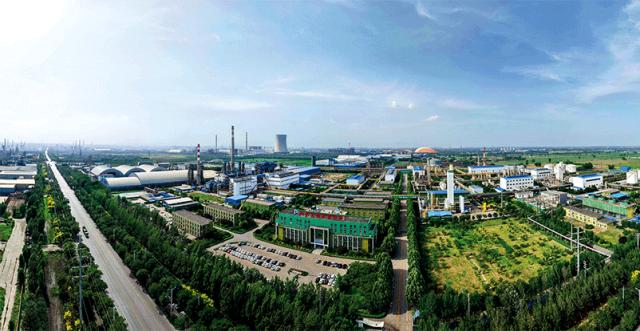
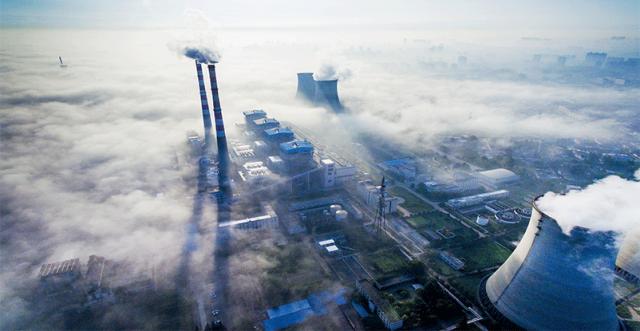
A methanol-reforming hydrogen-fred power plant, Xiaoyi, Shanxi Province (Photo by VCG)

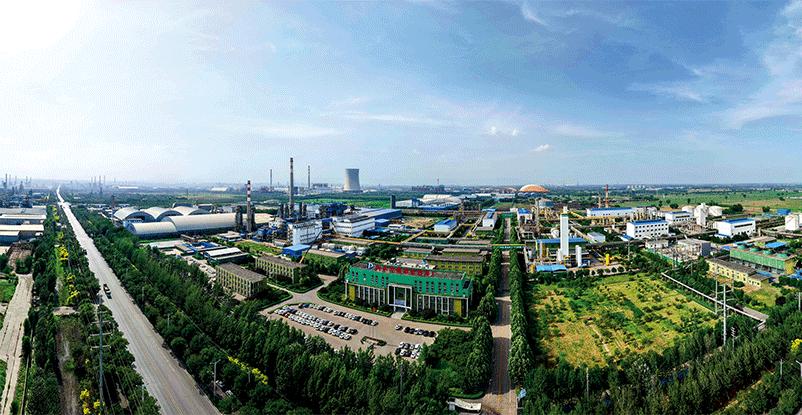
On a July morning, forklifts moved back and forth through the loading area of Datang Duolun Coal-to- Chemicals in Inner Mongolia Autonomous Region, loading trucks with polypropylene resin pellets, a raw material used to make everyday plastic items.
 
The product looked much as it always had. But the hydrogen used to make it reflects a quiet transformation. 

For years, the company produced hydrogen mainly through coal gasification, a process associated with high carbon emissions. Now, electricity generated by wind turbines and solar panels at a 150-megawatt wind and solar hydrogen demonstration project on the other side of the plant is being used to produce green hydrogen. The hydrogen is fed directly into the methanol synthesis process, replacing conventional "gray hydrogen," which gets its name from the fossil fuels it takes to produce. 

By mid-2025, the project was reducing carbon dioxide emissions by 138,800 tons annually, equivalent to the amount absorbed by about 7.5 million trees in a year, according to the local government. But so far, Duolun's transformation remains the exception rather than the broader industry trend.

Gray Matters
China is the world's largest hydrogen producer and consumer. According to the China Hydrogen Industry Development Report 2025 released by National Energy Administration, China produced and consumed more than 36.5 million tons of hydrogen in 2024, maintaining its position as the world's largest hydrogen producer and consumer. 

Yet the vast majority comes from fossil fuels. Coal-based hydrogen accounted for 56.7 percent of production, while natural gas accounted for 21.1 percent and industrial byproduct hydrogen another 20.8 percent. Hydrogen produced through water electrolysis powered by renewable energy, the main method for producing green hydrogen, accounted for only a tiny fraction of the total. 

"Replacing gray hydrogen with green hydrogen has long been a policy consensus, but it's far from a simple switch," Liu Siming, director of the New Energy Development Research Center, told NewsChina. "It requires a complex restructuring of both the energy and chemical systems." 

The technology is proven, Liu said, but "it is still a long way from large-scale industrialization." 

Building on its success in rapidly scaling up wind and solar power, China is now taking a more proactive approach to accelerating the transition to green hydrogen. On June 23, four government departments, including the National Development and Reform Commission (NDRC), China's top economic planner, issued a guideline setting minimum renewable energy consumption targets and renewable power consumption quotas. 

Effective from August 1, the guideline brought non-electricity applications including green hydrogen, green ammonia and green methanol into the mandatory assessment framework for companies for the first time. The move signals a major shift from expanding green energy supply to actively creating demand for it in the hydrogen industry, turning green hydrogen from a voluntary option into an increasingly important factor in corporate compliance and cost calculations.

Cost Problem
China's existing green hydrogen projects are largely concentrated across its north, where abundant wind and solar resources have pushed renewable electricity prices down. "The northern regions have abundant wind and solar resources, so green electricity is cheaper," Liu told NewsChina, noting that electricity accounts for the largest share of green hydrogen production costs. But even so, the economics remain difficult. 

According to Liu, producing 1 kilogram of hydrogen through electrolysis requires roughly 45 to 55 kilowatt-hours of electricity. This brings energy costs to more than 20 yuan (US$3) per kilogram, about 60 percent of its total production cost and considerably higher than for gray hydrogen. 

At a 2025 Tsinghua University forum on the carbon-neutral economy, Liu Yinghong, deputy general manager of Sinopec's Development Planning Department and New Energy Office, put the cost gap in stark terms. 

Coal-based hydrogen costs only about 12 yuan (US$1.80) per kilogram in China, while it costs about 15 yuan (US$2.25) with natural gas. The total cost of green hydrogen is around 22- 32 yuan (US$3.25-4.75) per kilogram, more than twice that of gray hydrogen. 

Falling renewable electricity costs offer some hope. In China's northern regions, photovoltaic power generation costs have fallen to around 0.15-0.20 yuan (US$0.02-0.03) per kilowatt-hour. This could bring green hydrogen costs below 15 yuan per kilogram, approaching the cost of gray hydrogen. 

That calculation was one reason Sinopec built its first 10,000-ton-scale photovoltaic green hydrogen demonstration project in Kuqa, Northwest China's Xinjiang Uygur Autonomous Region. 

The nearly 3 billion yuan (US$450m) project began producing hydrogen in June 2023 and was fully completed two months later. Second only to Saudi Arabia's NEOM Green Hydrogen Project in size, the Kuqa plant is designed to produce 20,000 tons per year. The project sends hydrogen through a pipeline to a refinery about 20 kilometers away, replacing hydrogen previously produced from natural gas. 

The project relies on conventional alkaline electrolyzers, a mature tech that splits water into hydrogen and oxygen gases with electricity and an alkaline solution. Though inexpensive, startup and shutdown can take tens of minutes, making it poorly suited to intermittent wind and solar power, Liu Siming explained. 

This mismatch leaves electrolyzer capacity underutilized and can drive up production costs. For example, Sinopec's Kuqa project produced a cumulative 14,900 tons of green hydrogen by September 2025, meaning its annual output during that period was only around 30 percent of its designed capacity. 

More advanced technologies, such as proton exchange membrane (PEM) electrolyzers, can respond more flexibly to fluctuations in renewable power, with cold startup taking only a few minutes. 

However, Zhang Bo, a professor at Shanghai-based Fudan University who specializes in electrocatalysis, told News- China they come at a much higher cost. 

PEMs rely heavily on iridium, whose global annual output is only around 7 to 10 tons. "The price is more than 1,600 yuan per gram (US$238), making it more expensive than gold," Zhang said. 

Moreover, producing each kilogram of hydrogen requires around 9-10 liters of deionized water, posing an additional challenge in northern and northwestern China, where water resources are scarce. And that is before factoring in depreciation and labor. 

For chemical companies, which currently account for the bulk of hydrogen demand, the economics can be even harsher. 

Their existing coal-to-hydrogen facilities typically have lifespans of 20 to 30 years, with investments ranging from tens of millions to billions of yuan. Companies are not only reluctant to abandon these facilities before recovering their investments but are also highly sensitive to additional costs. Even a modest increase in the cost of each kilogram of hydrogen can translate into huge annual expenses for plants consuming tens of thousands of tons of hydrogen.

Market Mismatch
Another challenge is that while green hydrogen can be produced cheaply in China's north, major hydrogen-consuming industries are concentrated in the country's east and south. The result, Liu Siming said, is a difficult situation in which green hydrogen can be "produced but not transported or sold." 

That is because hydrogen is costly to move. It has a very low energy density, and its tiny molecules easily leak and weaken metal. For long distances, hydrogen is typically carried as compressed gas in specialized 20-megapascal tube tanks, a kind of pressure found 2 kilometers deep in the ocean. 

Transport costs about 8.5-9 yuan (US$1.25-1.35) per kilogram within 100 kilometers. After 200 kilometers, the economics deteriorate sharply, Liu added. 

One solution is to convert hydrogen locally into products that are easier to transport, such as ammonia and methanol. Methanol can be used directly as an industrial feedstock or fuel, while ammonia, traditionally used to produce fertilizer, is increasingly being explored as a fuel in itself. Methanol and ammonia can also be converted back into hydrogen. Songyuan Hydrogen Energy Industrial Park, a pilot project in northeastern Jilin Province, has adopted such a model, producing hydrogen from renewable power and then converting it into green ammonia and methanol. 

Established by China Energy Engineering Corporation (CEEC), the park is being developed in phases, with an overall plan for 3 gigawatts of renewable power capacity and annual production of up to 800,000 tons of green ammonia and methanol. Its first phase, which began operations in December 2025, includes 800 megawatts of renewable power capacity and annual production capacity of 45,000 tons of green hydrogen, 200,000 tons of green ammonia and 20,000 tons of green methanol. 

"Songyuan may not have the strongest individual wind or solar resources, but its overall advantages make it stand out," said Li Jingguang, Party secretary and chairman of China Energy Construction Hydrogen Energy, a CEEC subsidiary. 

More importantly, he said, the project can adjust its ammonia plant operations to better match the fluctuations in wind and solar energy. 

But even with such approaches, green fuels remain significantly more expensive. Based on 2025 market conditions, domestic gray ammonia sold for around 2,800 yuan (US$390) per ton, while some operating green ammonia projects faced production costs approaching 4,000 yuan (US$600) per ton. 

Higher prices mean China's green hydrogen, ammonia and methanol industries have yet to develop demand at scale. 

"The government's policy focus should now shift from promoting production to expanding applications," said Li Jingguang, adding that support should go to industry standards and certification, storage and transportation infrastructure and the development of viable business models.

Policy Push
Subsidies, however, have only begun to catch up in the past two years. In February, Yunnan provincial government introduced measures to promote green electricity consumption, including subsidies of up to 13 yuan (US$2) per kilogram for eligible green hydrogen projects. 

The policy marked the first provincial-level subsidy program specifically targeting green hydrogen. The province has abundant hydropower resources but often has surplus electricity during periods of high water availability, making hydrogen production a potential way to absorb excess power. 

In March, the Ministry of Industry and Information Technology, the Ministry of Finance and the NDRC issued a notice on pilot programs for hydrogen energy applications. 

The policy raised the maximum central government reward to 1.6 billion yuan (US$240m) for each participating city cluster. It aims to bring the average end-use price of hydrogen below 25 yuan (US$3.70) per kilogram by 2030, with leading regions targeting prices below 15 yuan (US$2.25). 

According to Liu Siming, rather than simply paying producers based on how much hydrogen they supply, the new scheme uses a performance-based reward system. Subsidies are allocated in advance and settled later based on annual performance evaluations of participating city clusters, with support gradually reduced over time. 

The policy is also focusing on industrial applications with greater potential. Unlike previous programs that focused heavily on transport, the new plan includes four specific areas in the national pilot scheme for the first time: promoting green ammonia, replacing fossil-based hydrogen in industrial processes, increasing the use of hydrogen in metallurgical industries and blending hydrogen into industrial fuels. 

Changing global carbon rules could also create new opportunities for green hydrogen. Since January 1, 2026, the EU's Carbon Border Adjustment Mechanism (CBAM) has covered certain products in six carbon-intensive sectors: steel, aluminum, cement, fertilizers, electricity and hydrogen. 

Companies exporting to Europe will need to provide compliant carbon footprint data or pay the carbon cost based on default values. The EU set its CBAM price for the first quarter at 75.36 euros (US$87.60) per ton of CO2, more than seven times China's domestic carbon price. As carbon costs become an increasingly important factor in global trade, CBAM could give industrial producers a stronger incentive to switch from gray to green hydrogen to reduce the carbon footprint of their exports. 

China is moving in the same direction. In March 2025, the Ministry of Ecology and Environment expanded the national carbon market to cover steel, cement and aluminum smelting, bringing the sectors covered by the market to more than 60 percent of the country's total CO2 emissions. In November of that year, the ministry announced preparations to expand the market to industries including chemicals, petrochemicals, aviation and papermaking, with the aim of bringing major industrial emitters broadly into the system by 2027. 

As the cost of carbon emissions is gradually brought into the equation, the price advantage of gray hydrogen could begin to narrow. For producers that rely on coal, emissions once treated largely as an external cost could increasingly become part of the production bill. 

At the same time, policy is beginning to create demand from the other end of the market. In the past, companies' use of green hydrogen was largely a matter of choice. Under the emerging policy framework, major energy-consuming companies that fail to meet specified targets could face regulatory interviews and have violations recorded in their credit histories. 

As companies seek to meet increasingly stringent energy and emissions targets, such policies could create a new source of demand for green hydrogen and its derivatives, helping push the market beyond government-supported production toward wider industrial use. 

Yet experts caution that scaling up hydrogen production will also increase demand for electricity and water. The deeper challenge is whether surplus wind and solar power can be effectively absorbed and whether renewable generation can be better matched with hydrogen production and downstream industrial demand.

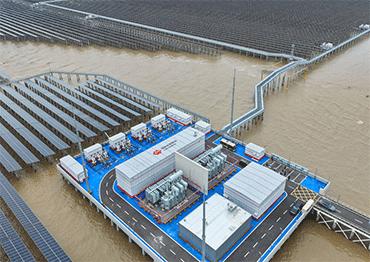
A 400-megawatt integrated photovoltaic-hydrogen-energy storage system developed by CHN Energy Guohua Energy Investment, Rudong, Jiangsu Province, August 14, 2026. With an electricity generation capacity of 468 GWh, the project can reduce carbon dioxide emissions by 309,400 tons a year (Photo by VCG)

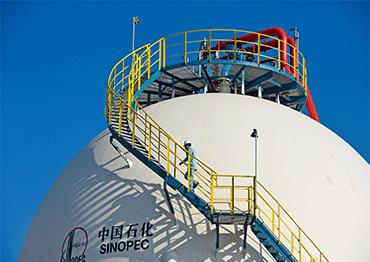
The photovoltaic-based hydrogen production project in Kuqa, Xinjiang Uygur Autonomous Region (Photo by Xinhua)

Print