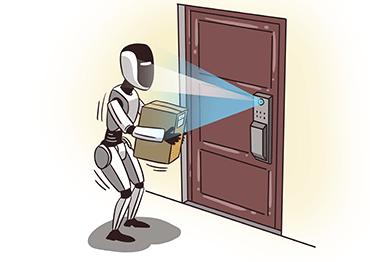
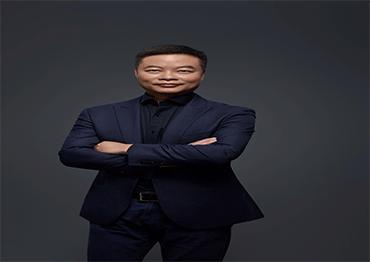
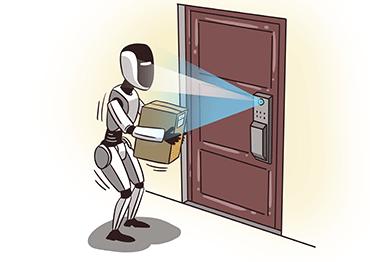
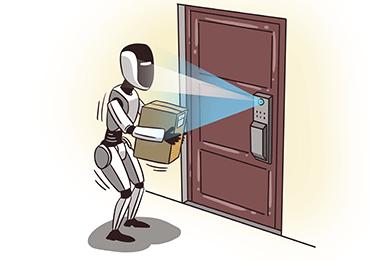
“Many families now use smart locks, and we believe that in the near future, robots will be able to safely open doors with customer authorization and deliver their packages directly into their homes.”
Liu Qiangdong, founder of e-commerce platform JD.com, at the 2025 World Internet Conference Wuzhen Summit held from November 6-9, announcing that JD will establish the world’s first fully unmanned delivery station by April 2026 and is partnering with numerous robotics companies
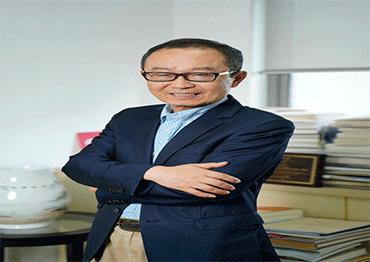
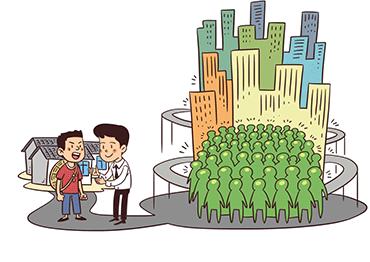
“After several decades of development, the biggest challenges for China’s economy have shifted to insufficient and weak demand. This requires us to change how resources are allocated and how fiscal spending is structured, and putting families, rather than production, at the center. In other words, we have to invest more in people.”
Zhang Jun, dean of the School of Economics, Fudan University, in an interview with Hongxing News in Chengdu, Sichuan Province, following the release of China’s 15th Five-Year Plan (2026-2030)
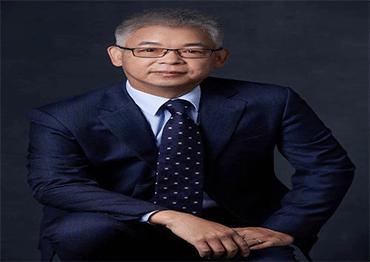
“We do need significant public policy intervention to address inequality. Although globalization and the AI revolution may bring enormous benefits, the key lies in ensuring that these gains are distributed fairly across all social groups, especially those disadvantaged by this revolution.”
Huang Yiping, director of the National School of Development, Peking University, at a sub-forum on the AI revolution during the 2025 Bund Summit held in Shanghai on October 24
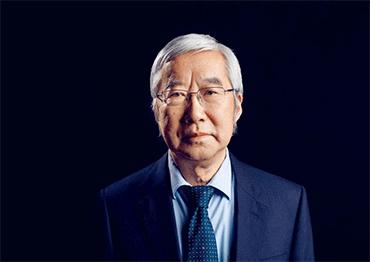
“For the US, the right policy approach is to upgrade its infrastructure and improve income distribution so that ordinary people and blue-collar workers can benefit more from global supply chains. The US leadership should not shift blame for its policy failures onto China. The US must take responsibility. China should not be the scapegoat.”
Yu Yongding, an academic member of the Chinese Academy of Social Sciences, at a sub-forum on tariff policies at the 2025 Bund Summit held in Shanghai on October 25
“The global auto market is valued at about US$10 trillion, which sees 90 million new vehicles produced each year. The robot market, however, could reach US$20 trillion, though it may take 10-20 years to get there. By then, there might be 200 million or more humanoid robots produced.”
He Xiaopeng, CEO of Xpeng Auto, speaking with media at a launch event for the company’s new-generation humanoid robot “Iron” on November 5 in Guangzhou, Guangdong Province
“The idea that there is no such thing as bad publicity has become all too common in today’s online content ecosystem. Some content creators deliberately provoke controversy with extreme or one-sided remarks, triggering gender or regional conflicts to spark outrage, draw attention and chase clout. This not only deepens social division but also fuels hostility and polarization across the internet.
Yu Han, special commentator for news portal The Paper, commenting on the deleting of popular vlogger Hu Chenfeng’s accounts on all social media platforms in September for labeling Apple users as “elites” and Android users as people at the bottom of society
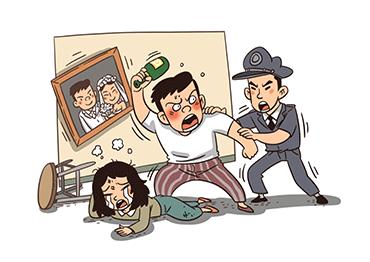
“Only when the social security system can cover a wider range of workers will flexible employment truly serve as a reservoir for jobs and build a foundation of social stability in an ever-moving China.”
Weng Yi, senior researcher at the Digital Economy Think Tank in Beijing, writing for Caixin in early November about the importance of providing social insurance for millions of delivery riders
“Milk tea has strong cultural symbolism as it goes global. Compared with vehicles or high-tech products, it’s a lighter export with lower barriers and less regulation. And unlike movies or TV, milk tea doesn’t cause disparity in values or cultural conflicts.”
Zhang Xuan, a consumer product analyst, discussing the expansion of Chinese milk tea brands amid a saturated domestic market with news portal guancha.cn
 Old Version