Zhou only started in the field in late January 2025, initially making AI videos part-time. In June, he committed full-time.
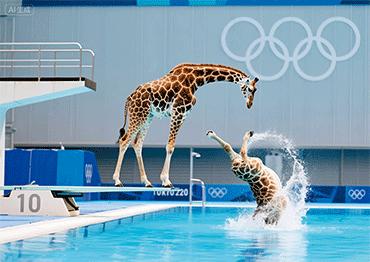
He spends hours testing models to optimize each shot. When Hailuo 02 came out, he experimented with uploading animal images to create diving sequences, then enhanced the 18-second clip with AI-generated sports commentary. The result took two hours to produce, and racked up 60,000 likes with 210,000 shares.
The success sparked a wave of animal-sports content. In the following days, Douyin’s #PetOlympics hashtag surged to 540 million views, with over 9,000 creators contributing videos of animals competing in gymnastics, figure skating and high jump.
Cute pet videos like these are trending on international platforms too. On June 20, Instagram account @pablo. prompt posted clips of cats performing triple-and-a-half dives, each with distinct personalities, from lazy strolls to energetic leaps. The reel gained 250 million views and nearly 10 million likes.
Sheng said she had “predicted” that cat-diving videos would be a hit even before Hailuo 02 launched. “Creators have long wanted to make such videos, but no model could deliver the effect until now,” she said.
“In the past, AI-generated video aimed to look realistic,” Sheng added. “Now audiences find obviously unreal videos just as entertaining.”
Other viral trends include generating plush versions of famous landmarks and chopping glass-like fruits. “It’s easy to copy an AI video. The real draw is novelty,” Zhou said. “That depends on how often platforms roll out model updates.”
Sheng emphasized that staying power comes not from viral templates but from model capabilities. “The key is whether the model can solve specific problems,” she said. “The success of Hailuo 02 lies in enabling high-difficulty physical movements.”
While Hailuo 02 and Kling AI mainly serve professional creators, Alsphere has taken a different route with its consumer app PixVerse, which boasts more than 40 million global users. Last October, PixVerse released a viral template that transforms users into the Marvel character Venom, sparking more than 1 billion video views worldwide.
Faster generation is also crucial. Alsphere says PixVerse can create a video in just 5-10 seconds. CEO Wang Changhu explained: “The key is lowering the barrier. Users only need to upload a photo and pick a template, no prompts required. Anyone can do it.”
In April, an AI-generated short drama by Yang Zheng won a competition and was selected for release on video platform Youku. The series has six episodes, each no more than two minutes long.
Yang handled every step. He used language model Claude 3.7 to refine the script and Hailuo 01 to generate visuals. The project took 25 days and cost him about 1,000 yuan (US$140), covering subscriptions for AI video platforms as well as software for dubbing, music and editing.
Two months later, Yang signed a contract with a major video platform to adapt comics into dramas. He is also producing AI-powered costume dramas and content tailored for overseas audiences, with plans to expand his studio.
“For AI-generated dramas, it’s still experimental,” Yang said. “My clients are mainly startups or newly created departments exploring AI-generated content. They want to seize opportunities but remain cautious.”
 Old Version