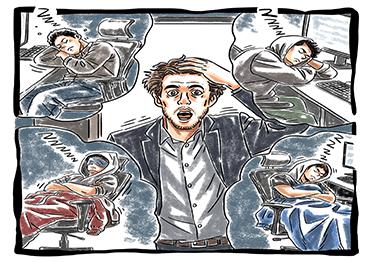
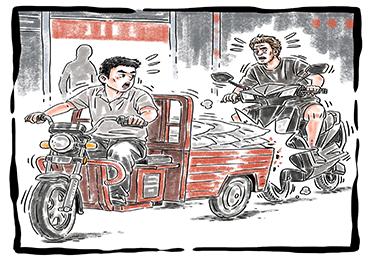
fter a decade of living in China, I should be used to things being on a vast scale. I’ve pushed my way through throngs of thousands to take a train during national holidays. The Beijing subway map has sprouted new lines every year I’ve lived here. I’ve flown over the Greater Bay Area and seen the homes of 80 million souls. I’ve been to that hotpot restaurant in Chongqing with 900 tables. While I am perhaps a little jaded, two days visiting the Canton Fair was still enough to make my head spin.
The fair, formally known as the China Import and Export Fair, is the country’s oldest and biggest trade expo, which also makes it one of the largest in the world. Twice a year since 1957, merchants come from around the country to hawk their wares to buyers from around the globe. In its early days, the Canton Fair mainly showcased China’s agricultural goods. But today, the fair presents China’s manufacturing industry in all its bewildering diversity and depth.
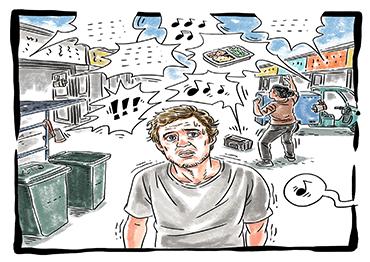
You can get a taste of the experience without even going into the building. Just walk around outside and you’ll get business cards and brochures waved in your face by those who didn’t manage to get a booth, selling patio lights, umbrellas, pool cleaning gear and anything else. If you’re a foreigner, you’ll also meet strangers asking if you’ll let them register as your assistant – getting in is easy as an overseas buyer but restricted for Chinese. But where there’s a rule there’s a way to get around it, as evidenced by the number of “buyer’s assistants” handing out business cards for logistics firms.
The fair is split into three phases. The one we visited included clothing, fashion accessories, shoes, bags, furs, home textiles, carpets, health products, medical devices, office supplies, sports products, toys, maternity and baby products, food, pet products and traditional Chinese specialties.
You might think that because that list is so long, that there wouldn’t be too many stalls for each category. You’d be underestimating the size of the purpose-built venue. My traveling companion was exclusively interested in home textiles, so they only visited those stalls. Even after two full days of walking the floor there were still sections they hadn’t visited. Booths which sell every kind of product in their category – like the factories which could supply you an entire new wardrobe of polyester fashion – sit alongside those of startling specificity, like the several stalls I saw offering nothing but party balloons in every color.
As I walked up and down the aisles, breathing in salesmen’s cologne, I saw glimpses of the Chinese economy that is taking shape as well as the economy as its existed for decades. A special exhibition on smart healthcare tech had the innovative, cutting-edge products that often take pride of place in the domestic media – AI-powered robotic massagers and brain-computer interface technology. But the merchants selling shirts, teddy bears and cushion covers were competing on price and efficiency.
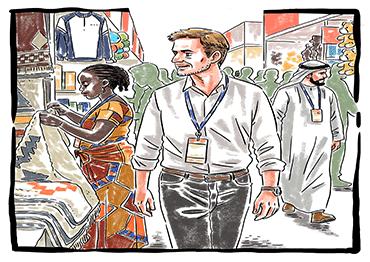
The diversity of products is mirrored in the attendees. Congolese women hunting for blankets rub shoulders with Israeli sportswear buyers and Russians on the hunt for toys queue for the toilet behind Arabs looking for baby strollers. However, some nationalities were conspicuous in their near-absence. During my visit, I only heard two American accents – perhaps a consequence of Trump’s trade war.
One major missed opportunity for showing off is that the food at the Canton Fair is dreadful, despite being held in one of the greatest foodie cities on the planet. After you’ve worked up an appetite walking 15,000 steps in the morning, your options are either McDonald’s (no fries) or airplane food. And that’s not my disparaging description; the food is actually supplied by an airline catering firm.
That evening, finally enjoying decent grub at a congee hotpot restaurant (a mere 20 tables), I reflected on what made the experience so overwhelming. Taking the most jaded perspective, the Canton Fair is like visiting a big market grafted onto an international airport. But the experience is more than the event itself. It’s the gigantic web of commerce that the fair represents. The factories all over China and their millions of workers. The countless trucks, trains, boats and planes that will ferry these goods to buyers in every nation. The army of entrepreneurs brokering deals at every step. The Canton Fair is global consumer culture in microcosm.

 Old Version